
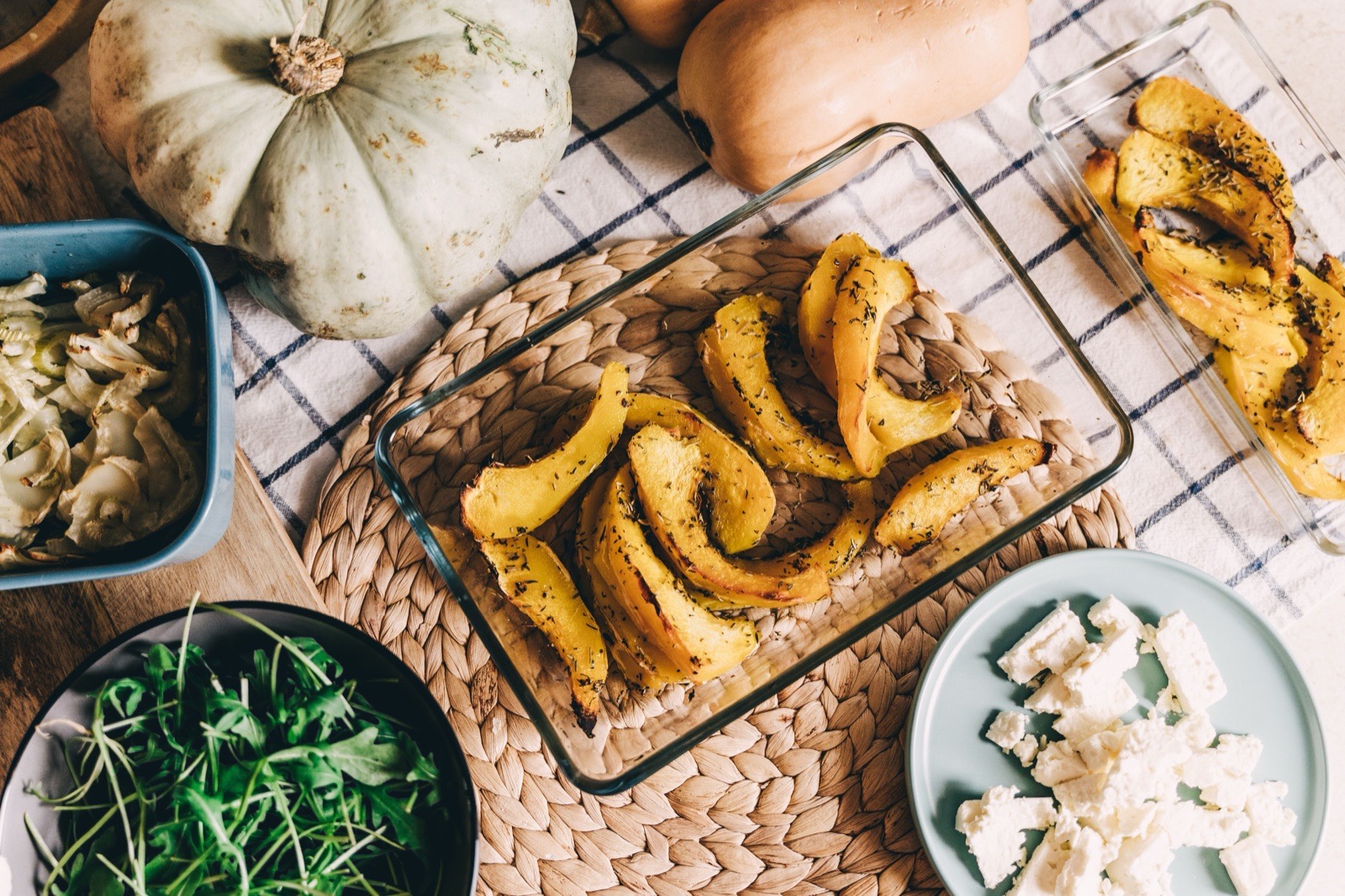
In autumn, Ayurveda says to eat food that is the opposite of the weather: warm, cooked, moist and a little oily. Lean on the sweet, sour and salty tastes. Ease off the bitter, pungent and astringent ones. Build your meals around root vegetables, squash, soft cooked grains, ghee and gentle warming spices, and eat them at regular times. The reason is Vata. Ayurveda treats autumn as Vata season, and Vata runs cold, dry, light and changeable, exactly like the weather outside.
Salad season is over, whatever your meal plan says
Look at what you ate this week. There is a good chance it is still July on your plate. The big raw salad at lunch. The smoothie on the way out the door. Iced water on the desk.
None of that was wrong in August. The weather changed. The menu did not.
Ayurveda's rule for the seasons is short: like increases like, and opposites bring balance. Cold, dry, light food in a cold, dry, windy month adds more of the same. That is why the food question in autumn is not "what is healthy" in general. It is "what does this season have too much of, and what pushes back?"
Why autumn food should be the opposite of the weather
Vata is the dosha of air and space. Its qualities are cold, dry, light, rough and mobile. Autumn brings the same qualities from outside: shorter days, cooler mornings, drying wind, weather that swings from one day to the next.
When Vata builds up, Ayurveda describes a familiar set of signs: dry skin and lips, gas and bloating, a low appetite, and a scattered mind. These are common and they are not a diagnosis. If a digestive change is new, lasts, or worries you, talk to your healthcare provider rather than only adjusting the menu.
The food answer is the opposite set of qualities:
- Warm instead of cold. Cooked food, warm drinks.
- Moist instead of dry. Soups, stews, porridge, anything with a little liquid.
- Oily instead of rough. A spoon of ghee or sesame oil in the pan.
- Heavy enough instead of light. Satisfying, not stuffed. Ayurveda is just as clear that too much food, or food that is too heavy, dims the digestive fire.
Grounding food does not mean bigger portions. It means enough substance that you are not hungry and wired an hour later.
The three tastes to lean on, and the three to ease off
Ayurveda reads food by taste, because each of the six tastes moves the doshas in a particular direction. For Vata season the split is clean.
Lean on these three:
- Sweet. Not dessert. In Ayurveda, sweet means the nourishing staples: rice, wheat, oats, milk, dates, sweet potato, pumpkin. It is the most grounding taste on the list.
- Sour. A squeeze of lemon over rice or greens, a little yogurt at lunch. Ayurveda uses sour to wake up digestion.
- Salty. A pinch of salt in the cooking water, seaweed in a broth. In Ayurvedic terms salt holds moisture, which is the point. If your doctor has told you to limit salt, that advice comes first.
Ease off these three:
- Bitter. Raw kale, big bowls of bitter greens. Coffee sits on this side of the table too.
- Pungent. Hot chili in quantity. Gentle warming spices are different, and they belong in autumn cooking. More on that below.
- Astringent. Most dried beans (mung is the exception), pomegranate, green tea. Ayurveda describes astringent food as drying and tightening, and Vata is already dry.
Ease off does not mean cut out. The Ayurvedic ideal is still all six tastes at a meal. In autumn you simply weight the plate toward sweet, sour and salty, and let the other three play a smaller part.
The autumn plate: roots, squash, cooked grains, ghee, warm spices
Here is what a Vata-season kitchen actually holds.
- Root vegetables and squash. Sweet potatoes, carrots, beets, parsnips, pumpkin, butternut. They are sweet, dense and moist, and they happen to be what is in season. Roast them, mash them, or simmer them into soup.
- Soft cooked grains. Basmati rice, oats, wheat, quinoa. Cooked until soft, not toasted into something crunchy.
- Good fats. Ghee first, then sesame, almond or sunflower oil. Cook with them. A finishing spoon of ghee on rice is traditional. A spoon, not a ladle.
- Easy proteins. Split mung dal is the Ayurvedic standby because it suits every constitution. Soak the beans and cook them with ginger, cumin, coriander and turmeric so they sit well. If you eat eggs, fish or meat, the colder months are when Ayurveda welcomes them in moderate amounts.
- Warming spices. Fresh ginger, cinnamon, black pepper, cumin, cardamom, a pinch of asafoetida. These warm a dish without the burn of chili.
- Soft or cooked fruit. Stewed apples or pears with cinnamon, ripe bananas, figs, dates. A cold, crisp apple straight from the fridge is a summer habit.
- Warm drinks. Warm water through the day, ginger or cinnamon tea, spiced milk in the evening.
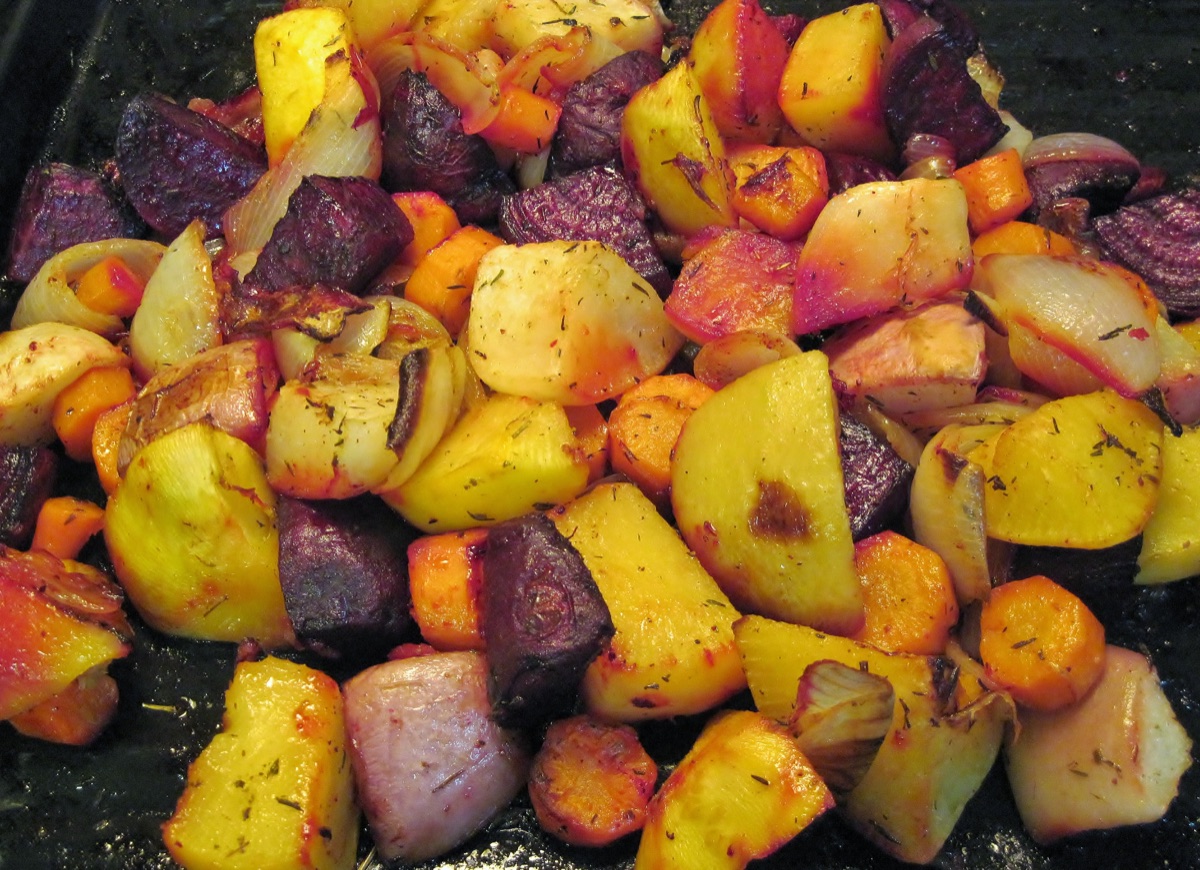
If this looks close to the Ayurvedic winter grocery list, that is not a coincidence. Late autumn and early winter are both cold and dry, so the food carries straight through. For a single pot that uses most of the list at once, start with the autumn vegetable stew.
Swaps that cost nothing
You do not need a new shopping list to start. You need to change the temperature and texture of what you already buy.
- Cold to warm. Iced water becomes warm water. Cold cereal becomes oats cooked with cinnamon. The morning smoothie becomes stewed fruit or warm spiced milk.
- Raw to cooked. The same vegetables you put in a salad, sauteed in ghee with cumin seeds. Take spinach. Ayurveda says raw spinach adds to Vata, and the same spinach wilted in sesame oil with cumin settles it.
- Dry to moist. Crackers, rice cakes, popcorn and dry toast give way to porridge, soup, dal and buttered bread. Dry leftovers get a splash of broth when you reheat them.
- Skipped to seated. Coffee as breakfast becomes an actual warm breakfast. Lunch at the keyboard becomes lunch at a table.
Pick two. Keep them for a week. Notice how your digestion and your afternoons feel. That is more useful than any list.
Adjusting for your constitution: a Pitta or Kapha type in Vata season
The season acts on everyone. Your own constitution decides how far you lean into the autumn plate. If you are not sure of your type, the dosha quiz is the quickest place to start, and What to Eat for Your Dosha covers each type year round.
If you are Vata, the whole list applies, and applies hardest. Autumn stacks the season on top of your nature. Take the timing section below seriously, because irregularity is where Vata slips first.
If you are Pitta, warm and moist still apply, but hold back the heat. Sweet taste is your best friend here, because it calms Vata and Pitta at once: rice, squash, sweet potato, milk, ghee. Go easy on chili, very sour food and heavy salt, which feed the fire you already carry. Early autumn often brings leftover summer heat, so a cooling food on a hot September afternoon is not a mistake.
If you are Kapha, be careful with the comfort. Autumn's heavy, sweet, oily food is close to what already builds Kapha. Keep it warm and cooked, but lighter: brothy soup over creamy casserole, more ginger and black pepper, cooked bitter greens rather than no greens, smaller portions of rich sweets and dairy. Pungent spice helps Kapha, so the warming spices do double duty for you.
Timing matters as much as the plate
Vata is irregular by nature, so Ayurveda's answer to it is rhythm. Perfect food eaten at random times, standing up, still leaves you unsettled.
- Eat at roughly the same times each day. A predictable rhythm is itself grounding.
- Make lunch the main meal. Ayurveda teaches that digestive fire is strongest when the sun is highest, so the heaviest food belongs in the middle of the day.
- Keep dinner earlier and lighter. Soup or stew, not a second lunch.
- Sip warm, not iced, with meals. Ayurveda holds that cold water taken with food turns the digestive fire down.
- Sit down. Vata is the energy of movement. Eating on the move adds more of it.
A simple autumn day of eating
This is a template, not a rulebook. Swap in what you like and what your household will actually eat.
- On waking: a cup of warm water, with a slice of fresh ginger if you like it.
- Breakfast: oats cooked with a spoon of ghee, cinnamon and a pinch of salt, topped with chopped dates or stewed apple.
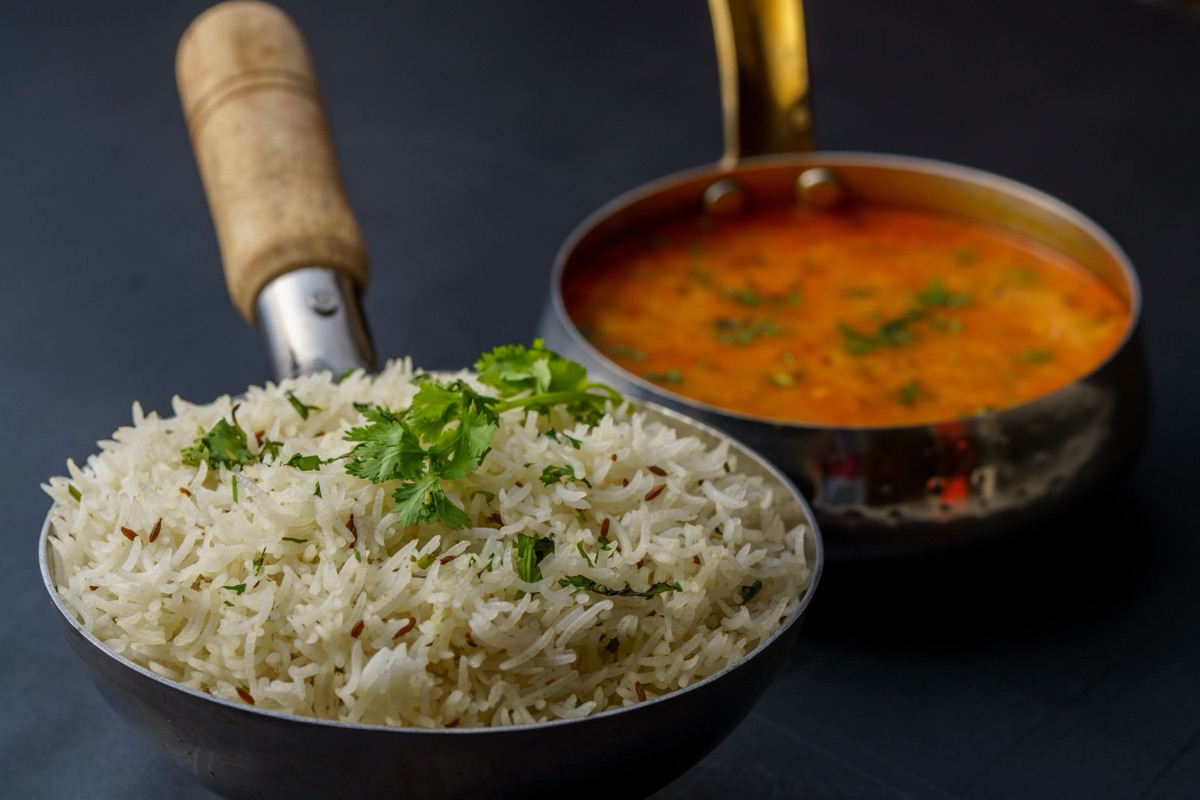
- Lunch, the main meal: basmati rice, mung dal tempered with cumin and turmeric, roasted squash and carrots with ghee, a few sauteed greens, and a squeeze of lemon. Sweet from the rice and squash, sour from the lemon, salty from the seasoning, a little bitter from the greens, astringent from the dal, pungent from the spices. All six, weighted the autumn way.
- Afternoon: ginger or cinnamon tea and a date or a few almonds, instead of a cold snack.
- Dinner, early: a bowl of vegetable soup or stew with rice or bread.
- Evening, if you want it: warm milk with cinnamon and a pinch of nutmeg.
Do not overhaul the kitchen in one weekend. Change one meal this week and one more next week. If you manage a medical condition, take medication, or follow a diet your doctor set, check with your healthcare provider before making significant changes to how you eat.
The weather has already turned. Let your plate catch up.