

If you fall asleep fine but wake around 3 a.m. and cannot drop back off, Ayurveda says you are waking in the Vata hours. In the dosha clock as it is usually taught, roughly 2 to 6 a.m. belongs to Vata, the light, dry, moving quality. In the tradition, sleep in that window is thin by nature, so anything that stirs the system (a late dinner, a glass of wine, a busy mind, a windy autumn) makes it easier to surface and harder to sink back. The tradition's answer is grounding: a warmer, earlier evening, a fixed morning, and a calm plan for when your eyes open.
You fell asleep fine. The problem starts at three.
Falling asleep is not the issue. Then your eyes open, the room is dark, and your mind is already halfway through tomorrow's list. It is 3 a.m. Again.
That is a different complaint from lying awake at bedtime. The rhythm of sleep sorts night trouble by dosha: Vata as restlessness and tossing and turning; Pitta as waking in the middle of the night hot, agitated or thinking; Kapha as oversleeping and a groggy morning. The hour you wake is the first clue.
The Ayurvedic clock: the Pitta hours, then the Vata hours
Ayurveda divides the day and the night into repeating blocks, each governed by one dosha. The night reset lays out the night half:
- 6 to 10 p.m., Kapha. Heavy, slow, drowsy. The easy window for falling asleep.
- 10 p.m. to 2 a.m., Pitta. Hot and active, turned inward. The tradition's digesting and repairing shift, and the source of the second wind.
- 2 to 6 a.m., Vata. Light, subtle, mobile. Dreams get busier, sleep gets thinner, and just before sunrise the mind turns clear.
Two honest notes. The four-hour blocks are a teaching framework, not a measurement, and the edges move with sunrise and season. And this is tradition, not physiology. Read that way, waking around 1 or 2 feeling hot and irritated points toward Pitta. Waking between 3 and 5 feeling light, restless and scattered points toward Vata.
Why the early hours are light, and why autumn adds to it
A core principle of Ayurveda is that like increases like. Vata is light, dry, cold and moving, and the Vata hours are when those qualities peak, so this is the part of the night your sleep is easiest to knock loose.
Sleep medicine sees the same stretch of night differently. Early in the night you get more deep sleep; as the night goes on, deep sleep shrinks and REM periods, the stage associated with dreaming, get longer. The same reference notes that as people age they spend less time in deep sleep. A meta-analysis of overnight sleep recordings in healthy adults found the same drift: with age, the share of deep sleep falls and time spent awake after first falling asleep rises. The studies it pooled date from 1960 to 2003, and few looked at middle age specifically. None of that proves the dosha clock. It does mean the thin, dream-heavy early morning is real, and tends to thin further with age.
Then there is the season. Ayurveda treats autumn and early winter as Vata's season: cool, dry, windy, changeable. Our seasonal Ayurveda guide puts it in one line: autumn builds Vata. Stack Vata's season on Vata's hours and the tradition expects lighter sleep and earlier waking this time of year. Shorter days and darker mornings are one more shift your routine has to absorb.
Evening changes that carry through the night
What happens at 3 a.m. is set up at 7 p.m. Meet light with heavy, cold with warm, dry with oil, and movement with routine.
Eat dinner earlier, and make it warm. A cooked, simple meal, finished a few hours before bed. Soup, dal, stewed vegetables, rice. The night reset explains why: a late, heavy meal keeps the body busy when it should be settling.

Rethink the nightcap. A review of the sleep studies on alcohol in healthy volunteers reported the same pattern at every dose: people fell asleep faster, slept more solidly in the first half of the night, and had more disrupted sleep in the second half. The second half is the one you are waking in. Those were healthy volunteers, not people who already wake early, so treat it as a reason to try a week without the wine, not a verdict.
Have something warm. Warm milk with a pinch of nutmeg or cardamom, or a caffeine-free herbal tea, is the evening drink the rhythm of sleep suggests. The Ayurvedic rules for milk add two details: heat it, never drink it cold, and leave at least an hour after dinner. Treat it as a signal that the day is over, not as a sedative.
Oil your feet. Two minutes of warm sesame oil worked into the soles, then cotton socks. In Ayurveda, oil answers Vata with its opposite qualities: warm, moist and grounding where Vata is cold, dry and light. Winding down builds foot oil into a short evening ritual alongside dimming the lights.
Dim the house. In a lab study of healthy adults aged 18 to 30, spending the hours before bed in ordinary room light instead of dim light delayed the start of melatonin release and shortened how long it lasted. It measured melatonin, not sleep, in young people living in a research unit, so it is no promise about your nights. Lowering the lights costs nothing.
What to do when you are awake at 3 a.m.
First, what to avoid.
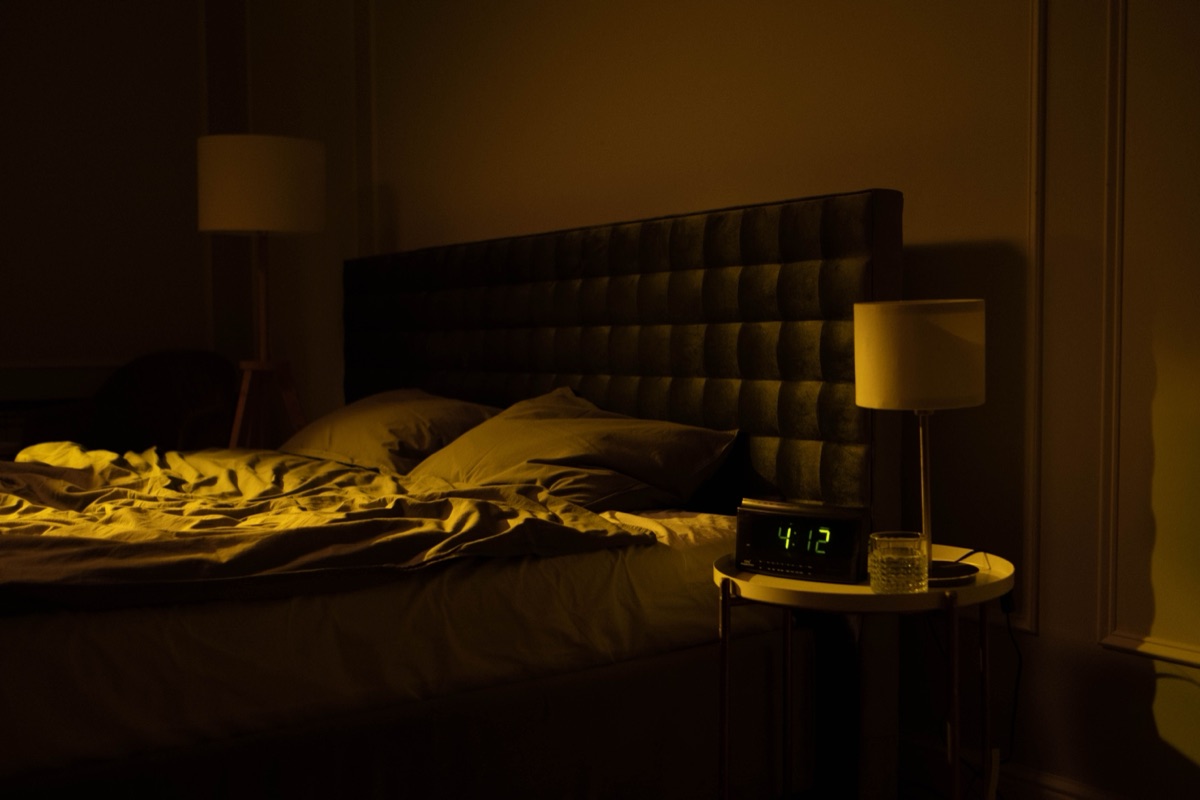
- Do not check the clock. In one pair of small experiments, people told to watch a clock while trying to fall asleep reported more worry and took longer to drop off than people who were not, and that held for good sleepers as well as poor ones. They tested bedtime, not night waking, but the mechanism is familiar: the number starts a calculation, and the calculation starts the worry. Turn the clock to the wall.
- Do not pick up the phone. Bright light and a stream of news are the two things a light, busy Vata mind needs least.
Then what to try.
- Stay warm and still, and slow the breath. Let each exhale run a little longer than the inhale.
- Move your attention through the body. Let it rest on one part at a time, noticing without analysing. That body scan is one stage of yoga nidra, and you can do it lying right where you are.
- If frustration builds, get up. Go somewhere dim and warm, do something dull, and return to bed when sleepy. This comes from a method sleep clinicians call stimulus control, whose instructions include getting out of bed when you cannot sleep, getting up at the same time every morning, and skipping daytime naps. The guideline behind it is written for clinicians working with a long-term sleep disorder and rates it as conditional. The logic still suits an ordinary bad night: stop teaching your bed that it is a place for lying awake.
Why a fixed wake time helps more than a later one
After a broken night, the instinct is to sleep in. Resist it.
Sleep researchers work from a widely used model with two parts: a sleep drive that builds the longer you are awake and is paid down by sleep, and a body clock that sets when sleep comes easily. Sleep until nine after a bad night and you start the next evening with less drive built up, which makes a good next night harder to get. It is a model, not a guarantee, but it explains why the wake time is the anchor.
Ayurveda arrives at the same place by a different road. Sleeping past sunrise pulls you into Kapha's heaviness, as the rhythm of sleep puts it, while rising before or near sunrise catches Vata's clarity. So pick a wake time you can keep seven days a week and keep it after the rough nights too. Short on sleep? The tradition's answer is an earlier bedtime inside the Kapha window, not a later morning.
When waking is a reason to talk to your provider
Some early waking is a signal that deserves a proper look. Talk to your provider if:
- A partner notices loud snoring, breathing that stops and starts, or gasping, or you are sleepy and tired through the day. Those are listed symptoms of sleep apnea.
- You are in perimenopause or past menopause and hot flashes or night sweats are what wake you, or you are getting up several times a night to urinate. Changing hormone levels can disrupt sleep, and your provider can go through the options with you.
- Early waking comes with low mood, loss of interest in things you used to enjoy, or a sense of hopelessness. Early morning waking is one of the ways depression can show up in middle age.
- It started around the same time as a new medicine or supplement. Some can affect sleep.
- It has gone on for weeks and is wearing down your days.
Nothing here replaces that conversation. The evening habits can sit alongside it.
A seven-night experiment
Do not change everything tonight. Add one layer at a time.
- Nights 1 and 2. Dinner warm, cooked and finished early. No alcohol.
- Nights 3 and 4. Add the wind-down: lights low after dinner, screens off an hour before bed, oil on the feet.
- Nights 5 and 6. Add the 3 a.m. plan: clock facing the wall, phone out of reach, slow breath and a body sweep, out of bed if frustration builds.
- Night 7. Keep all of it.
Every morning, the same wake time and one line on paper: roughly when you woke (a guess is fine), how long you were up, and how you felt by mid-morning. After seven nights you will know which change moved something. If nothing moved, bring that page to your provider.
For the whole evening framework, from the Kapha bedtime window to yoga nidra, start with the Ayurvedic sleep guide.