
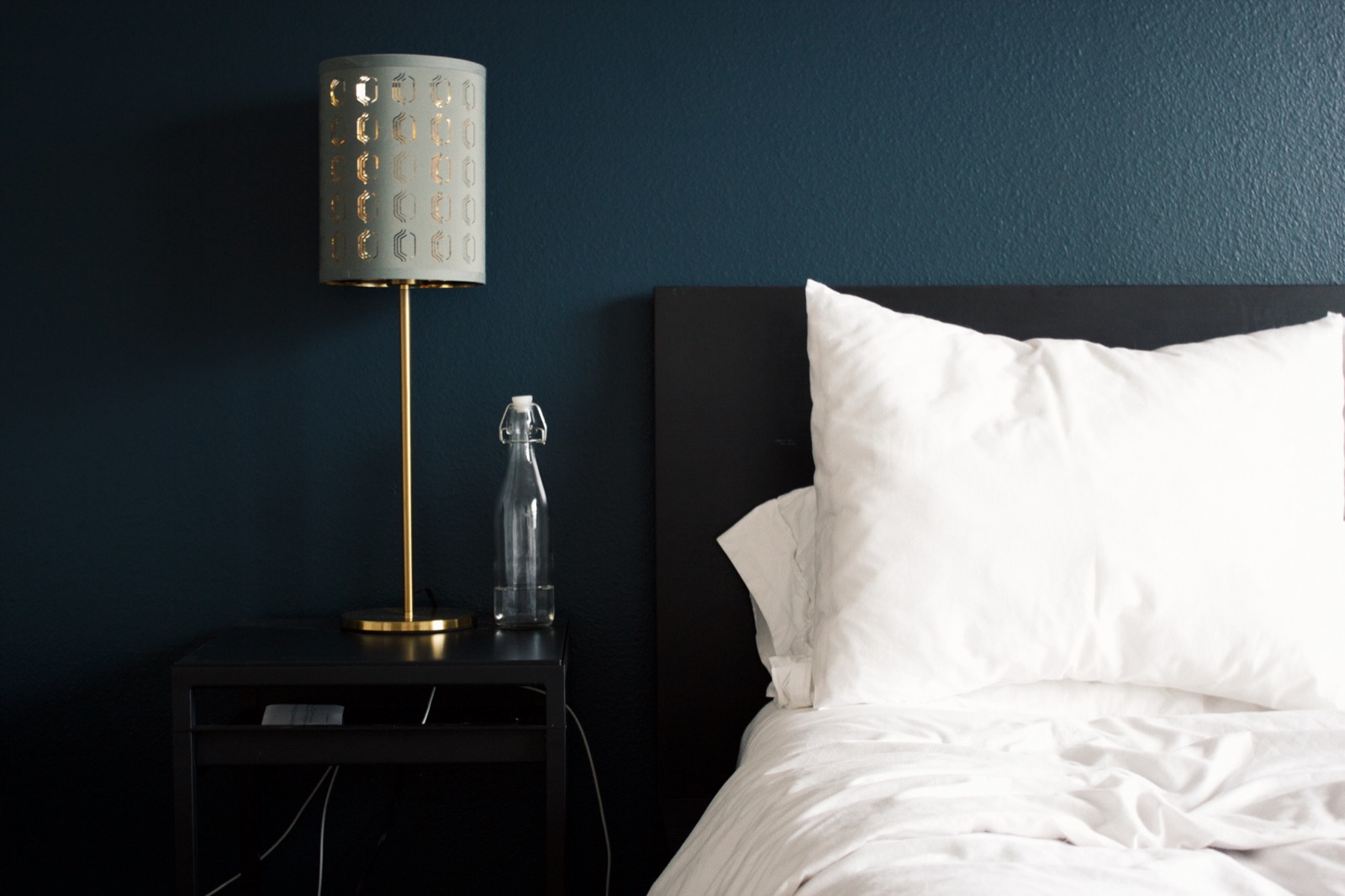
An Ayurvedic evening routine is a short sequence you repeat in the last hour or two before bed, to mark the end of the day. The five rituals here are warm oil on your feet, hands or scalp, dimmer light once it gets dark, a few quiet minutes outside, gratitude or a mantra, and a warm caffeine-free cup. None of them is a sleeping pill. Ayurveda treats them as signals that the day is closing, and a signal means most when it comes at the same time every night. You do not need all five. Start with one, at the same time, every night.
How you end the day matters
Most of us do not end the day. We just stop. We scroll until our eyes blur, chase tasks until we crash, or lie in bed with the mind still running the to-do list.
Ayurveda treats the evening as a transition with its own job, as important as what you eat or how you move. Its daily clock gives roughly 6 to 10 pm to Kapha, the heavy, slow quality that makes sleep come easily if you let it. That is tradition, not a lab result, and the night reset walks through the full clock.
These are the five rituals I come back to again and again. This page used to describe them in a few lines each. Here is how to actually do them, and what you can honestly expect.
1. Warm oil on your feet, hands or scalp
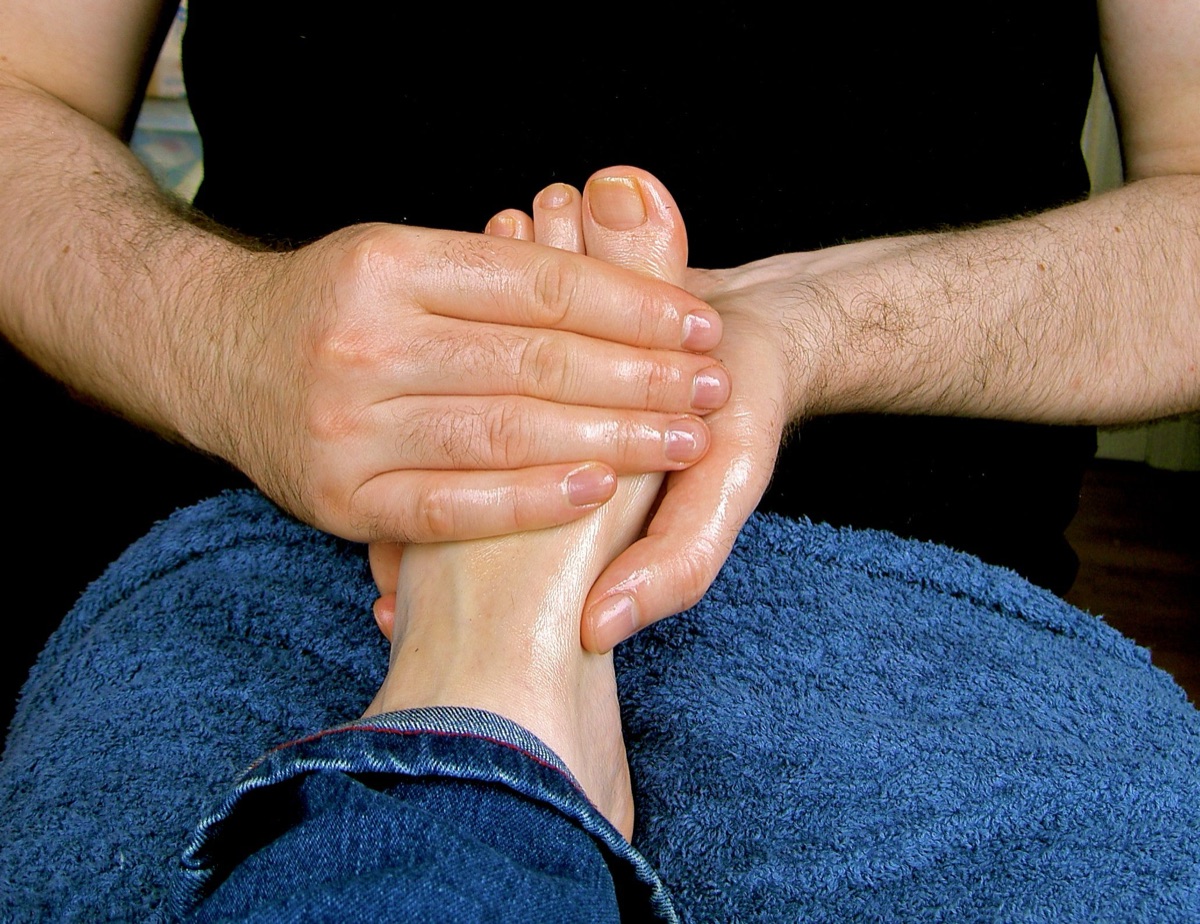
This is abhyanga, the Ayurvedic oil massage, in its smallest evening form. I do it most nights before bed with sesame or Brahmi oil. It takes five minutes.
- Warm the oil. Stand a small bottle of sesame oil in a mug of hot water for a few minutes. Test a drop on the inside of your wrist. It should feel warm, never hot.
- Pick one place. Feet if you feel scattered. Scalp if your head is busy. Hands if you have only two minutes.
- Go slowly. A teaspoon of oil. Long strokes along the soles and between the toes, small circles at the ankles. On the scalp, work from the hairline back.
- Protect the floor and the sheets. Put on old cotton socks after oiling your feet so you do not slip, and lay a towel over the pillow if you oiled your hair.
Skip any skin that is broken, irritated or newly inflamed, and try a small patch first if you react easily to oils. Our full abhyanga guide covers other oils and a whole-body version.
What to expect. The old version of this page said oil massage calms the nervous system almost instantly. That goes further than the evidence. The only study we found that measured stress after an abhyanga massage is a 2011 pilot: 20 healthy adults had a one-hour abhyanga massage from a practitioner, then reported less stress on a questionnaire and had a lower heart rate right afterwards. There was no comparison group, and it only measured the moments before and after one massage. It did not test five minutes of oil on your own feet, and it did not measure sleep. Take it as a reason to try, not a promise.
2. Dim the lights as it gets dark
Ayurveda asks you to follow the sun. When it gets dark outside, let it get darker inside too.
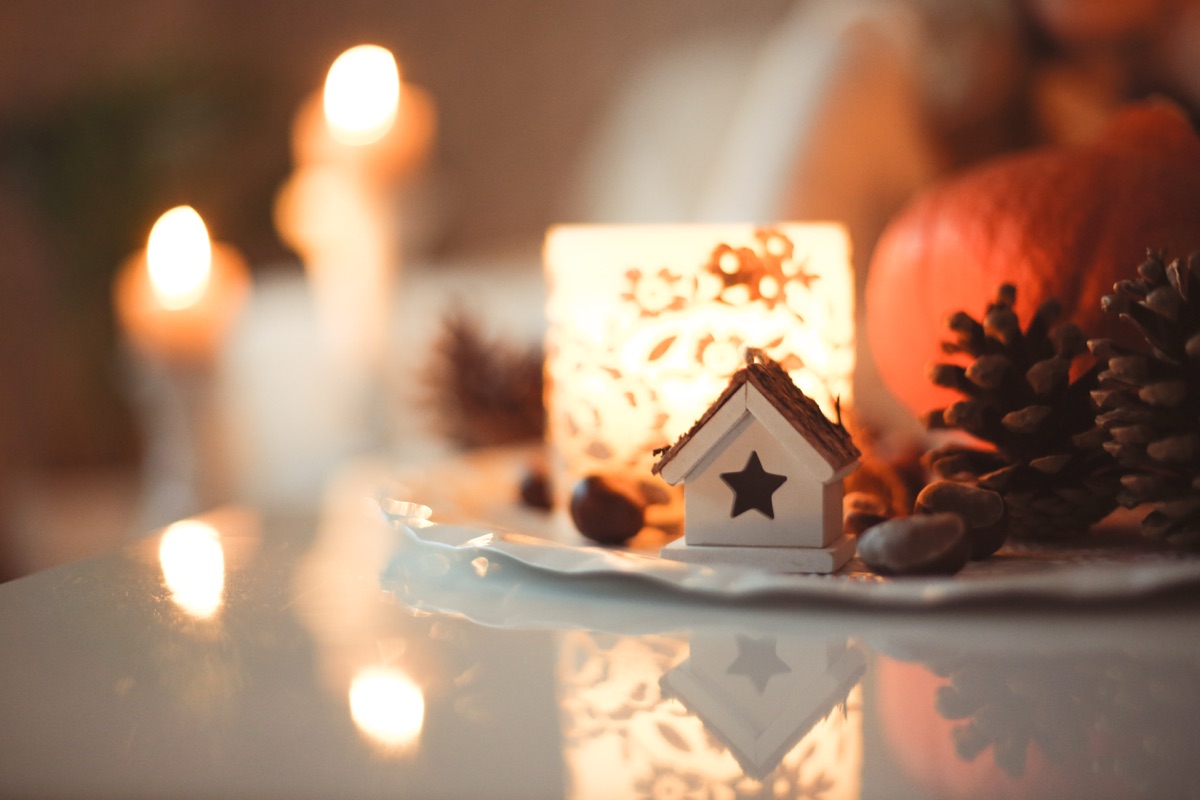
The timing. Start when the sun goes down, or when you first draw the curtains. Switch off the overhead lights and use a lamp or two, low and warm. If you live in the northern hemisphere, October brings that moment earlier every week, which makes it a good month to start. Then pick a time about an hour before bed when screens go off. I switch off bright lights and light a few candles, and one hour before bed my screens are off. If you use candles, keep them away from anything that can catch and put them out before you sleep.
What the research measured. In a 2011 laboratory analysis of 116 healthy volunteers aged 18 to 30, living in ordinary room light for the eight hours before bed, rather than dim light, delayed the evening rise of melatonin in almost everyone and shortened how long it was produced by about 90 minutes. Melatonin is the hormone that tells the body it is night. The limits matter: these were young adults in a research centre, the dim comparison was under 3 lux, far darker than a room lit by a lamp, and the study measured melatonin, not how well anyone slept. It is a good reason to lower the lights. It is not proof that lamps will fix your sleep.
Screens are their own problem, pulling your attention as well as your eyes. Ayurveda's guide to digital stress takes that on directly.
3. A few minutes outside under the evening sky
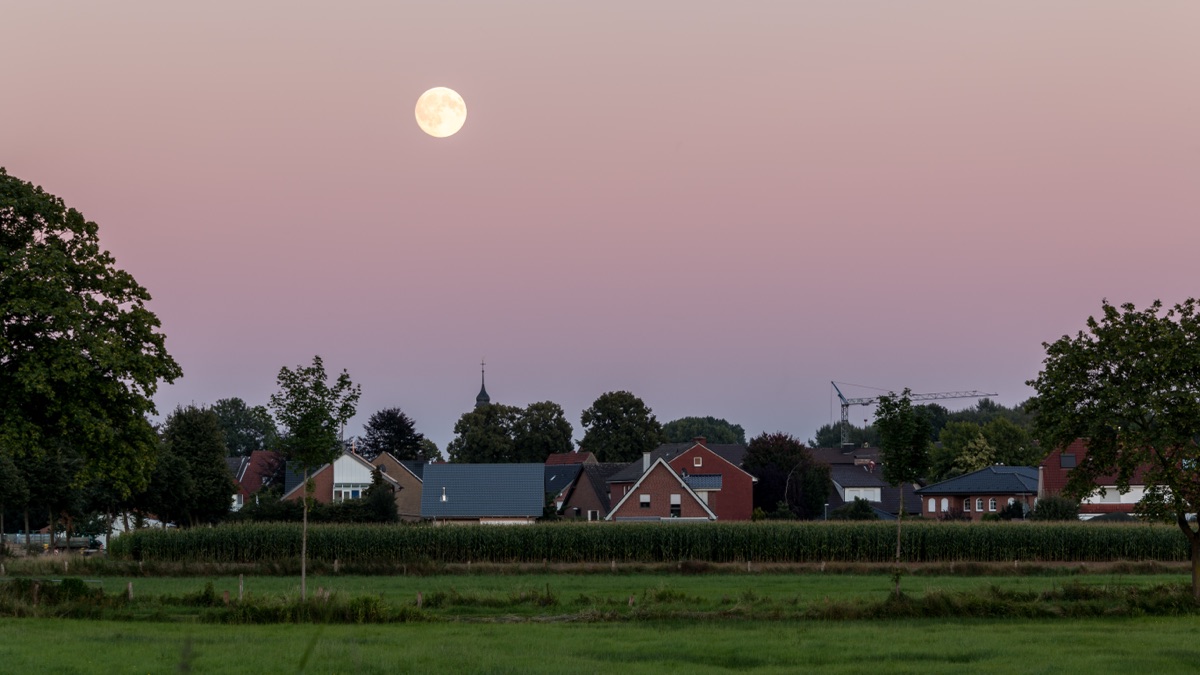
Some evenings, step outside and look up. At the moon if it is out, at the dark if it is not.
This one has deeper roots than it looks. Ayurveda's seasonal texts call the moon's rays cooling in summer. Autumn, roughly mid-September to mid-November in the Indian calendar, is the season they say stirs up Pitta, the fiery quality that can show up as a hot, overactive mind, and for that season they say moonlight in the first three hours of the night is good for health. The earlier version of this page said moonlight gazing does wonders, and that it works. That is not something we can back up, so we will not say it. What we can say is that this is a traditional practice, it costs nothing, and it gives the day a clear edge.
How to. Five minutes. No phone. Stand at the back door, on a balcony or at an open window if going out is not safe or easy. Wrap up in October. Breathe out a little longer than you breathe in, and let the day stop there.
4. Gratitude and a mantra
Before sleep, take a moment to close the day on purpose, not by collapse.
Gratitude, how to. Keep a small notebook by the bed, not your phone. Write three things from today that you are thankful for. Make them specific: the neighbour who took in a parcel, the soup that came out right. If tomorrow's jobs keep crowding in, write those on a separate page first, then close the notebook on both.
A mantra, how to. Sit on the edge of the bed or lie down. Silently repeat a short, calming phrase such as Om Shanti, which asks for peace. Say it once on each slow breath out. When your mind wanders, and it will, come back to the next breath. Two or three minutes is enough.
If your mind will not settle at all, lie down and put on a guided yoga nidra practice instead, and let the voice do the steering.
5. A warm cup: traditional choices
A warm drink is one of the oldest ways to tell the body the day is done. Keep it caffeine-free and modest in size.
- Warm milk with spices. A pinch of nutmeg or cardamom is the classic Ayurvedic choice. Use a plant milk if dairy does not suit you.
- Chamomile tea. A familiar evening herb far beyond Ayurveda.
- Tulsi tea. Holy basil, a traditional Ayurvedic herb, drunk as a simple herbal tea.
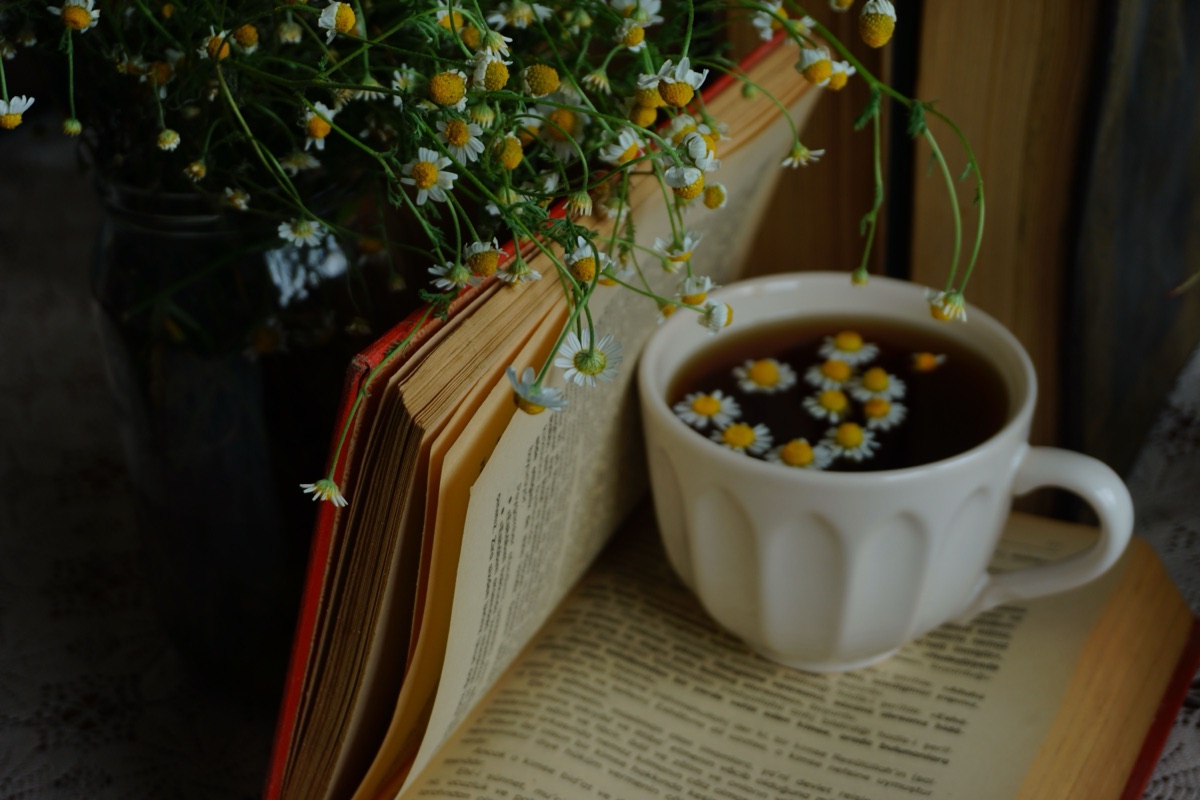
The old version of this page said tulsi, chamomile and ashwagandha teas regulate stress hormones. That was more than anyone can promise from a cup of tea, so here is what we could actually find.
Chamomile. A 2024 review gathered ten clinical trials with 772 people. Pooling five of them, people rated their sleep quality better with chamomile, but results varied widely from trial to trial. Sleep length and daytime tiredness did not improve, and the reviewers asked for future studies with objective measures of sleep. Not every chamomile sleep trial used tea, either. Some gave people extract capsules, which is not the same thing as a cup before bed. The US National Center for Complementary and Integrative Health describes chamomile as likely safe in the amounts found in tea, but it can cause allergic reactions, more likely if you are allergic to ragweed, chrysanthemums, marigolds or daisies, and interactions have been reported with the blood thinner warfarin.
Ashwagandha. This one deserves more care than the others. The five sleep trials pooled in a 2021 review tested ashwagandha extract against a placebo, not a mug of tea, and the reviewers said more safety data are needed on long-term use. The same federal centre notes that many ashwagandha studies have been small and have used different preparations. It says ashwagandha may be safe in the short term, up to three months, with not enough information on longer use, and that rare cases of liver injury have been linked to ashwagandha supplements. It advises avoiding it in pregnancy and while breastfeeding, says it is not recommended before surgery or for people with autoimmune or thyroid conditions, and lists possible interactions with several medicines, including medicines for diabetes and blood pressure, thyroid hormone, anti-seizure medicines, sedatives and drugs that suppress the immune system.
So check with your doctor or pharmacist before you start ashwagandha or any herb you plan to take regularly, especially if you take medication, and tell them what you already use.
Ongoing sleep trouble is a reason to see your provider
These rituals are how you look after your evenings. They are not a way around finding out why you cannot sleep. The NHS advises seeing a GP if changing your sleep habits has not helped, if you have had trouble sleeping for months, or if it is affecting your daily life in a way that makes it hard to cope. It also says to check with your doctor before taking anything for your sleep. The US National Center for Complementary and Integrative Health puts the Ayurvedic side of it plainly: do not use Ayurveda to put off seeing a health care provider about a medical problem.
Pick one tonight
You do not need a perfect bedtime routine. Five new habits at once is how routines die by Thursday.
- If your evenings end on a screen, start with the lights.
- If you get into bed feeling wired, start with the oil.
- If your mind replays the day, start with the notebook.
Do that one thing at the same time for a week before you add another. Timing is the part Ayurveda keeps coming back to, and the rhythm of sleep explains why. When you want the whole picture, from dinner to the dosha clock to deeper practices, the Ayurvedic sleep guide puts it together.
Rest is not a luxury you earn by finishing everything. It is where the day is supposed to end.