

Stress by dosha comes down to three different reactions. Vata stress looks like worry: a racing mind, too much speed, a routine that falls apart and sleep that breaks. Pitta stress looks like frustration: control, irritability, heat and working later. Kapha stress looks like shutdown: withdrawal, heaviness and reaching for comfort. Ayurveda answers each one with its opposite. Grounding for Vata. Cooling for Pitta. Stimulation for Kapha.
The rest of this page is about recognising your version, because the generic relaxation list you already tried was written for nobody in particular. It is one piece of our wider guide to Ayurveda for stress and calm.
Stress is one word for three different reactions
You say you are stressed. Your sister says the same thing. She cannot sleep and has a dozen tabs open in her head. You snap at everyone and scrub the kitchen at midnight. Your oldest friend stops answering texts and eats cereal for dinner. Same word. Three different states.
Ayurveda reads it this way. Each dosha carries its own qualities, and under pressure each one exaggerates them. Vata is air and space, so it speeds up and scatters. Pitta is fire and water, so it heats up and sharpens. Kapha is earth and water, so it slows down and holds on. If the names are new to you, start with the three doshas in plain terms.
Stress research does not stop at fight or flight. Researchers also describe freezing: a defensive state in which the heart slows and the body goes still while it gets ready to act. It is not a dosha. Freezing is a response to threat in the moment, not a mood that settles in for weeks, and in humans it is still largely unexplored. But it makes a similar point from another direction: the body does not always meet pressure by speeding up.
Vata under pressure: worry, speed and scattered attention
Vata stress is fast. Your thoughts outrun you. You start three jobs and finish none. You walk into a room and forget why. You eat standing up, or forget to eat at all, and the day loses its shape.

Ayurveda describes Vata strain as dry, cold and irregular: an unpredictable gut, cold hands and feet, sleep that is light and easily broken. Underneath sits fear, usually low-grade and hard to name. What if I forget something. What if it all goes wrong.
Here is the trap. Vata's instinct under stress is more movement. More lists, more checking, more doing. It feels productive. It is the problem feeding itself.
Pitta under pressure: control, irritability, heat and working later
Pitta stress is sharp. You do not fall apart. You take over. Other people become too slow. You rewrite the email your colleague already sent, and you are still at the laptop long after everyone else has stopped.

The tradition reads this as heat. You feel flushed and impatient. Hunger turns straight into a short temper. The critic gets louder, aimed at yourself and at everyone near you. Pitta flare-ups can run hotter still in summer, but this pattern is not about the weather. It is a way of meeting pressure, in any month.
The Pitta trap is control. Pitta believes the way out is to push harder and control more. Finish the project and the pressure will stop. It rarely does. There is always a next project.
Kapha under pressure: withdrawal, heaviness and comfort
Kapha stress is quiet, which is why it gets missed. Nobody sees you panic or snap. You just go still. You sleep longer and wake up tired. The sofa gets more persuasive. Emails sit unopened. You reach for the foods that feel like a blanket.
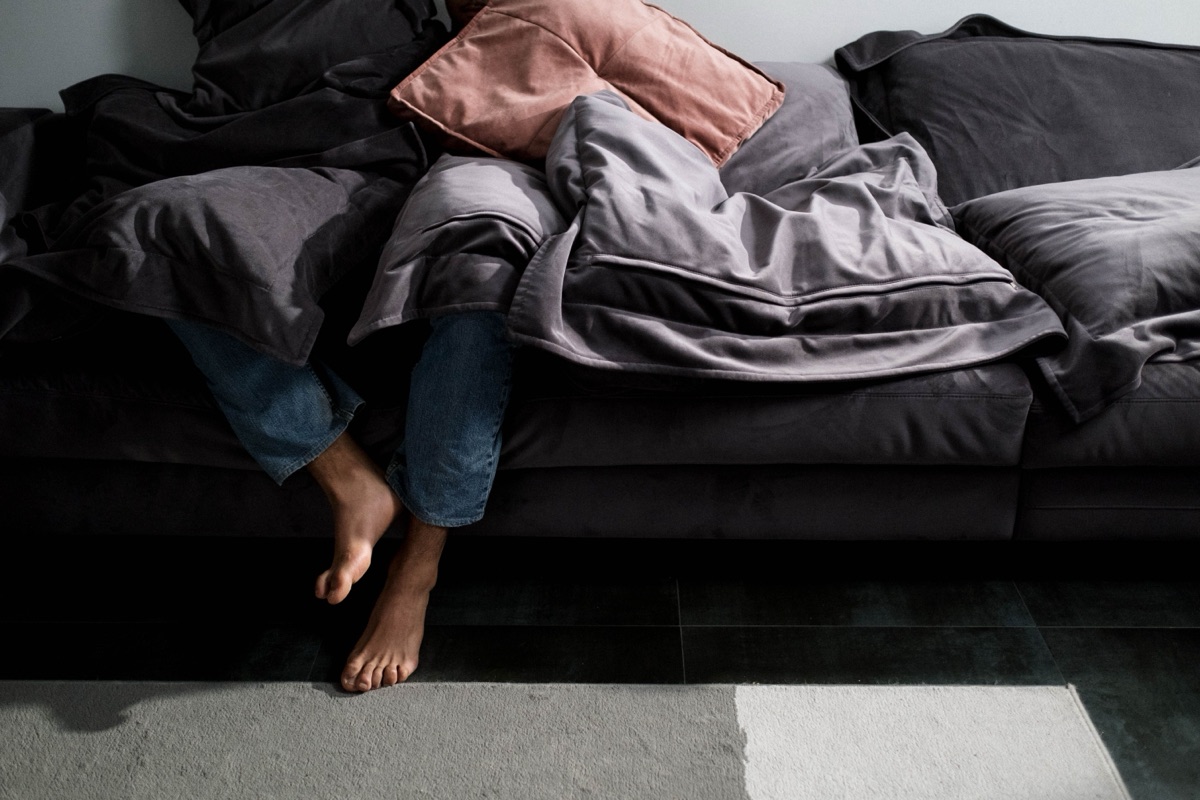
Kapha is the steady one, the person everyone else leans on. Under strain that steadiness turns heavy. Ayurveda describes attachment and stagnation here: holding on to a situation, a routine or a grievance long after it stopped doing you any good. From the outside it can pass for calm.
Kapha's trap is the mirror image of Vata's. The instinct is to rest until it passes. For Kapha, more stillness tends to mean more heaviness.
Your constitution and your stress pattern can differ
Plenty of dosha advice assumes a Kapha always stresses like a Kapha. She may not.
Ayurveda separates your constitution, prakriti, the balance you were born with, from your current state, vikriti, which shifts with season, age, food, sleep and whatever life is throwing at you. Overlapping dosha imbalances are common, especially in hard stretches. A naturally steady Kapha can spend a bad month in Vata worry. A light, quick Vata can run hot and irritable when she is the one holding everything together.
Ayurveda reads chronic stress as misalignment, a sign that effort has outrun wisdom, and describes long-running strain disturbing Vata. So work with the pattern you are in this week, not only the one printed on your quiz result.
What settles each: grounding, cooling, stimulating
The Ayurvedic rule is simple. Like increases like, and opposites bring balance. That means the practice that calms one pattern can aggravate another. It is why a friend's favourite stress routine did nothing for you.
For Vata worry, ground. Warmth, weight, rhythm and slowness.
- Keep regular times for meals and bed, even loosely. Rhythm is what Vata resists most and needs most.
- Choose warm, cooked, slightly oily food over cold snacks eaten on the move.
- Try warm oil self-massage, abhyanga, after a bath or before bed.
- Use low, slow, repetitive sound: humming, chanting, a steady drum. Sound healing in Ayurveda matches sounds to each dosha.
- Slow your breathing down. If it feels comfortable, let each out-breath run a little longer than the in-breath.
Slow breathing has some modern backing, with limits. A systematic review of slow breathing, meaning fewer than ten breaths a minute, reported greater relaxation and comfort alongside fewer reported symptoms of anxiety and anger. Only fifteen studies met its criteria, all of them in healthy people, and it looked at breathing rate, not longer out-breaths. Read it as encouraging, not settled.
For Pitta frustration, cool. Space, softness and less competition.
- Set a hard stop on work in the evening and keep it. The late push is the Pitta habit that costs the most.
- Step away before you reply. A walk in the cool of the evening, near water if you can, gives Pitta the cooling it is asking for.
- Do not skip meals. A hungry Pitta is an irritable Pitta.
- Favour sweet, bitter and cooling foods over hot, spicy, salty and sour ones, and go easy on coffee and alcohol.
- Try a cooling breath such as sheetali, and make time for something where nobody keeps score.
For more on the breath and food side of all three, see Ayurvedic practices for emotional balance.
For Kapha shutdown, stimulate. Movement, lightness, warmth and other people.
- Get up at a set time, earlier rather than later, and move before you decide whether you feel like it.
- Choose brisk over gentle, at a level that is safe for your body: a fast walk, dancing in the kitchen, anything that lifts your breathing.
- Eat lighter, warm and well spiced, and save heavy, sweet comfort food for a better week.
- Say yes to one plan with another person. Kapha withdraws under stress, and company pulls it back out.
One rule holds for every type. Pick one practice for your pattern and do it daily for a week. A single habit you keep beats a ten-step routine you abandon by Wednesday.
When stress signs are a reason to see your provider
Ayurveda is a way to read patterns and change habits. It is not a diagnosis, and a dosha label can hide something that needs a doctor. The overlap is real. Nervousness, irritability, a fast or irregular heartbeat and poor sleep are listed symptoms of an overactive thyroid. Palpitations, anxiety, broken sleep and low mood can all come with perimenopause and menopause. Feeling constantly tired, sleeping badly and losing interest in things you used to enjoy can be symptoms of depression, which is a real illness and not a personality type.
Talk to your GP or healthcare provider if these signs last, keep getting worse, or get in the way of your work, your relationships or looking after yourself. Call your emergency number if your heart is racing or pounding and will not settle, or if it comes with chest pain, shortness of breath or feeling faint. If you are having thoughts of harming yourself, contact emergency services now. In the US you can call or text 988 to reach the 988 Suicide and Crisis Lifeline; elsewhere, use your local emergency number. Ayurveda can sit alongside medical care. It does not replace it.
Find your pattern: take the quiz, then spend a week noticing
Start with your constitution. The free Dosha Quiz maps your answers to your dominant dosha and gives you a report built around it. That is your baseline.
Then watch yourself for a week. The quiz points to your constitution. Stress shows who you become. When pressure hits, notice three things. Do you speed up, heat up or slow down? What do you reach for: another task, control, or the sofa? And what happens to your sleep and your appetite that night?
Write one line a day and read them back at the end of the week. The pattern may match your quiz result. It may not, and that is useful too. Then choose the opposite quality and one practice from the lists above.
If you want the bigger picture, including the three gunas, breath practices for calm and where Ayurveda stops, it is all in Ayurveda for stress and calm.