
Eating when stressed matters in Ayurveda because the tradition treats the state you eat in as part of digestion, not a side note. A teaching Ayurvedic scholars trace to the classical texts holds that even wholesome food, eaten in the right amount, does not digest properly when you are caught in grief, fear, anger or sorrow. So the Ayurvedic answer costs nothing and starts at your next meal. Sit down. Slow down. Keep the hard conversation away from the table. Pause before you jump to the next task. And if you are too upset to eat, wait until you are calmer, then eat something warm and simple.
You can eat the perfect meal badly
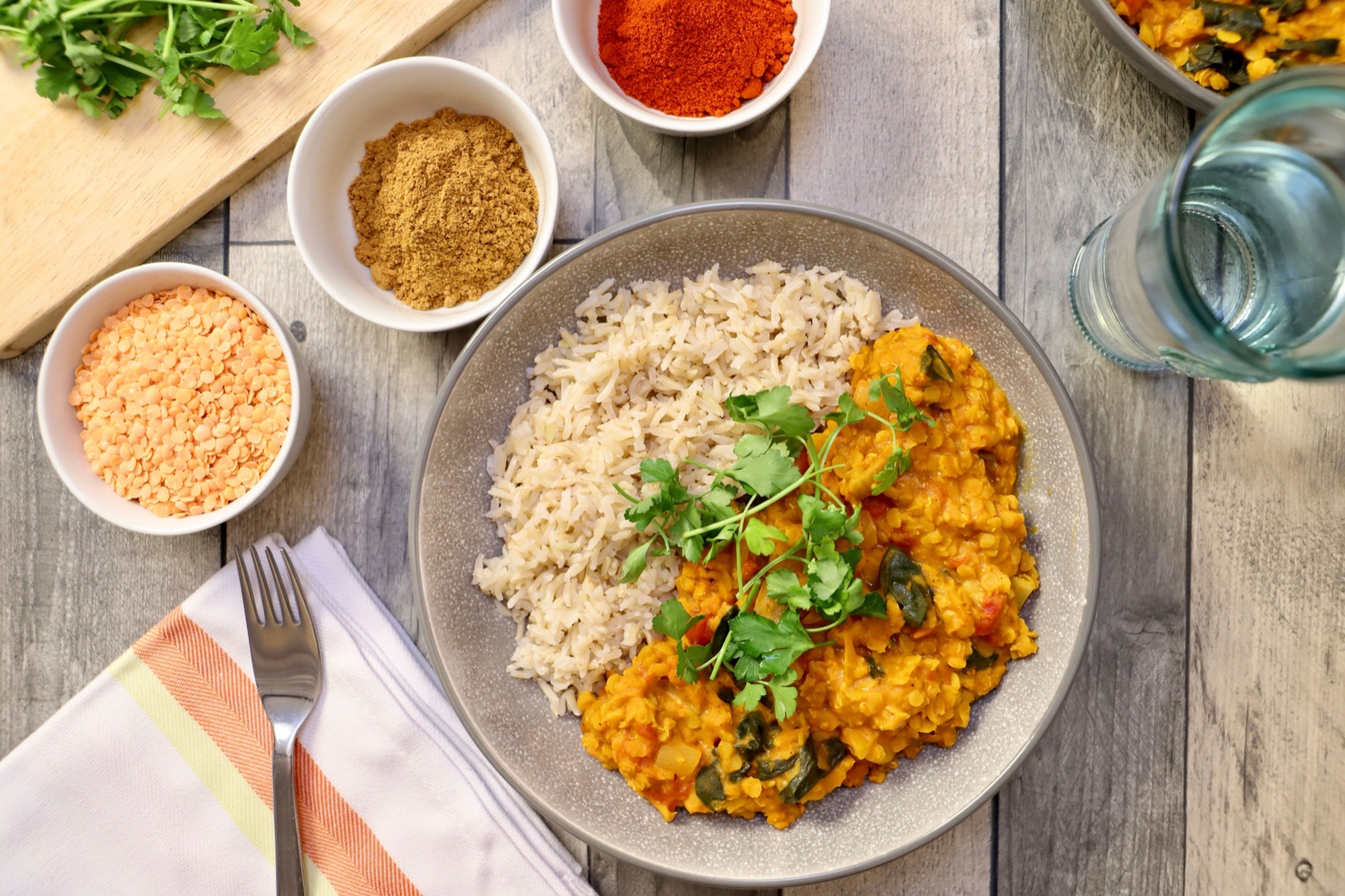
Picture lunch. Rice, dal, cooked greens, a little ghee. Ayurveda would approve of everything on that plate.
Now picture where it gets eaten. At the desk, one hand still on the mouse. In the car between appointments. Standing at the counter while you answer a text about your mother's care. Across the table from someone you are still angry with.
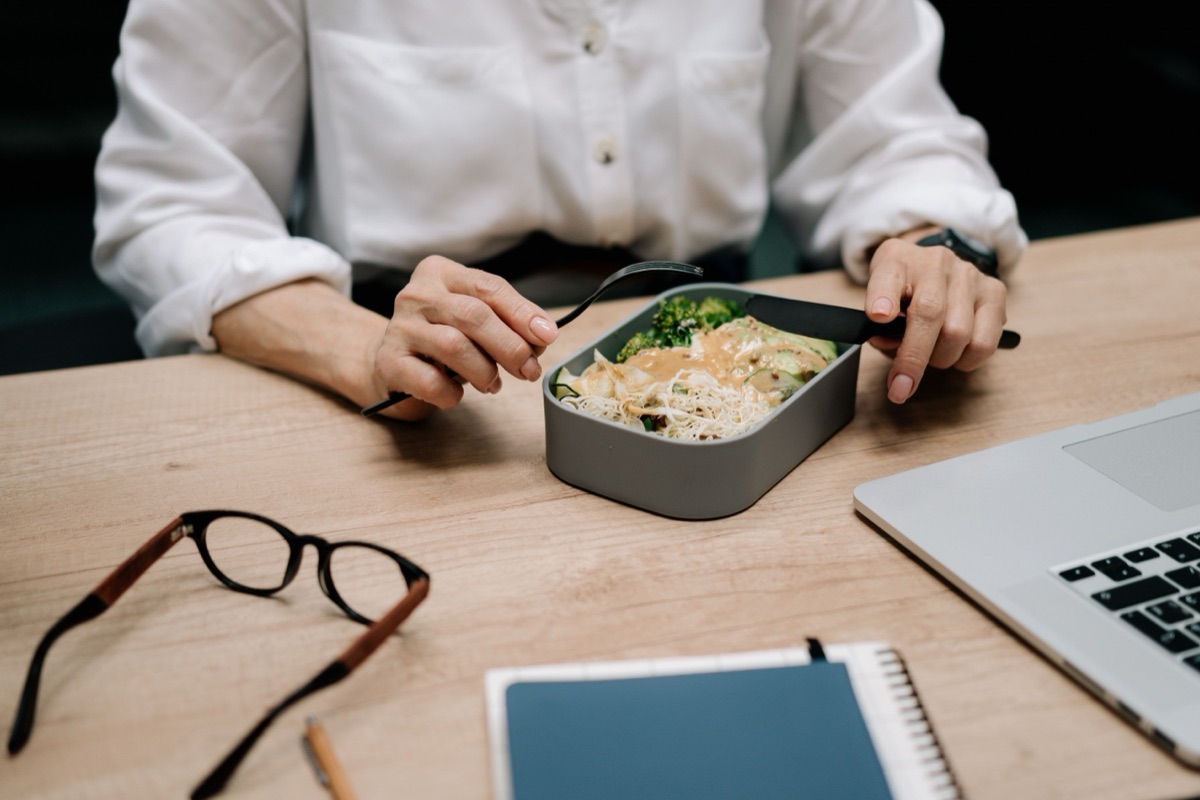
Same food. Different meal. Ayurveda says the second part matters as much as the first, and plenty of eating advice skips it.
What the classical texts say about eating upset
Ayurveda judges gut health by agni, the digestive fire, not only by the food you feed it. And the classical texts are specific about what gets in that fire's way.
A teaching that Ayurvedic scholars trace to several of them, the Charaka Samhita among them, says that wholesome food taken in the right quantity still does not digest properly when you are afflicted by grief, fear, anger or sorrow, or by a bed you cannot sleep in. Read that again. Not junk food. Not overeating. The right food, in the right amount, eaten in the wrong state.
Ayurvedic writers also name chinta, worry, as a direct cause of ama, the residue left behind when digestion cannot finish its work. They add a practical observation anyone who has had a hard year will recognize: a stressed person tends to drop the rules of eating altogether. Too much food or too little. No attention on the meal at all. In the Ayurvedic view, that is how ama quietly builds, from habits that feel completely normal.
The plate is the second question. Your state is the first.
A lot of eating advice starts with the menu. Ayurveda starts with you.
The classical dietary rules, known as ahara vidhi, do cover the food itself. They also cover how you eat it: not too fast, not too slowly, and with your mind on the meal, a rule known as tanmana bhunjita. Those are instructions about pace and attention. Not a single ingredient in them.
Modern research has asked a narrower question and landed somewhere nearby, though not firmly. Does stress change what the stomach does with a meal? In a small study from Korea, eight healthy volunteers, seven of them men, ate a test meal on two occasions, once under a sound-based stress test and once without it. Under stress their stomachs took longer to empty, and they rated their discomfort and fullness after eating as worse. An older study of ten healthy volunteers, using a different listening-based stress test, found no consistent change at all: some emptied more slowly, some faster, and some the same.
So the stress science is small and mixed. The Ayurvedic rules themselves have barely been tested. The one trial we found gave 33 people in India two weeks of advice on Ayurvedic dietary rules and daily habits, and reported better scores for their sluggish-digestion symptoms. But everyone knew what they were getting, only 30 finished, there was no group left without advice, and it could not say which rule did the work. The NHS does list stress and anxiety among the things that can cause acid reflux or make it worse, and acid reflux is a common cause of indigestion. That is reason enough to take your state at the table seriously. It is not proof of anything bigger.
Ayurveda never separated digestion from mood in the first place. Our piece on the gut as a second brain walks through that connection, and the Ayurvedic guide to gut health has the full picture of agni and ama.
Before the meal: sit down, three slow breaths, one screen off
Three moves. Under a minute.
- Sit down. Not the car. Not the counter. A chair and a table, even if the meal only lasts ten minutes.
- Take three slow breaths. Breathe in, then breathe out a little longer. Our piece on sattvic eating uses the same pause before a meal, with a moment of thanks for the food.
- Turn one screen off. The phone in another room is the strong version.
If you are still wound up from whatever came before, add a fourth move: wait. Sit for five minutes with a cup of warm water, which Ayurveda already asks you to sip through the day. That time is not a delay. It is part of the meal.

Calm at the table comes easier when there is some calm in the rest of your day. The Ayurvedic guide to stress and calm covers the breath and body practices for that side of it.
During: pace, chewing, and one easy conversation
Not too fast, not too slow. That is the classical rule, and it is harder than it sounds if you have eaten lunch at a sprint for most of your working life.
Put your fork down between bites. Chew until the food has lost its shape. Notice what it tastes like.
Here the modern evidence is a little firmer, with a catch. A review of 24 lab studies found that people who ate while distracted ate moderately more at that meal, and the rise in what they ate later on was bigger still. Eating slowly has been tested too. In one study of 30 healthy young women, eating a meal slowly rather than quickly meant they ate less and felt fuller at the end. The catch: both lines of work measured how much people ate, not how well they digested. The slow-eating study was small, and its volunteers averaged about 23 years old. Still, both point the way the tradition does.
Then there is the talk at the table. The classical ideal is a meal with your whole attention on the food. For most families, silent dinners are not happening, and eating with people you love is one of the good parts of a day. So keep the talk easy. Save the budget, the test results, the argument with your grown son and the call to the care home for after the plates are cleared. The meal is not the meeting.
After: a short pause before the next task
Most of us stand up from the last bite and walk straight into the next thing. Dishes. Email. The drive back.
Give it a few minutes. Stay seated. Finish your warm water. Let the meal settle before you ask your body to switch gears. If you can, make the next task a gentle one rather than the hardest conversation of your afternoon.
Timing matters here too. The tradition teaches that agni is strongest around midday, so a calm lunch does more work in the Ayurvedic view than a calm late dinner. If you only protect one meal this week, protect lunch.
When you are too upset to eat
Sometimes the kind answer is not yet.
Ayurveda's advice is to eat when the fire is ready. Our archive piece on agni puts it plainly: at mealtime, pay attention to your agni, and if it is low, eating is not advised. Grief, fear and anger are exactly the states the classical texts say get in digestion's way. Pushing a full plate into a body braced for a fight is not discipline. It is more work for a fire that is already struggling.
What to do instead:
- Sip something warm. Plain warm water, or a mild ginger tea.
- Step away from what upset you. Go outside for a few minutes, or sit somewhere quiet and let your breathing slow down on its own.
- When hunger comes back, eat small, warm and simple. Soup. Rice and dal. Kitchari, if you have it. Not the rich meal, and not whatever is in the snack drawer.
One caution. If you take a medication that has to be taken with food, or you have been told not to skip meals to keep your blood sugar steady, follow your provider's advice first. Waiting to eat is an Ayurvedic suggestion. It is not a reason to override your doctor.
Digestive changes that need a provider, not a new habit
A calmer meal is a good habit. It is not a diagnosis, and it should never be the reason you put off seeing someone.
The NHS advises seeing a GP if you keep getting indigestion, are in severe pain, have lost a lot of weight without meaning to, have difficulty swallowing, keep being sick, have iron deficiency anaemia, feel like you have a lump in your stomach, or have bloody vomit or poo.
It also warns that a heart attack can feel like indigestion, with a burning feeling in the chest or feeling full or bloated. Chest pain that feels tight or like squeezing, chest pain that spreads to your arms, neck or jaw, or severe difficulty breathing is an emergency. Call 911 in the US or 999 in the UK.
Add one rule of your own. If something changed and has not changed back, or it simply worries you, get it checked. Ayurveda works alongside medical care, not instead of it.
Start with the next meal
Do not try to fix every meal. Pick one, lunch if you can, and do three things. Sit down. Take three slow breaths. Leave the hard conversation for later.
Do that for a week, then notice how you feel an hour after eating. Your own body will tell you more than any rule on this page.