
Ayurvedic remedies for mood swings are mostly daily habits, not pills. Ayurveda reads ordinary ups and downs as a rhythm problem, usually a disturbed Vata, and answers it with regularity: meals at the same times, a steady bedtime and wake time, slow breathing with a long out-breath, warm oil on the skin and daily movement. These habits support everyday mood shifts. They are not treatment for depression, bipolar disorder or hormonal conditions, and swings that last for weeks or disrupt your life need a doctor.
One note before the rest. This page is education, not medical advice. If you are struggling right now, go straight to the section on when mood swings are a concern.
How Ayurveda reads mood swings
Ayurveda describes three doshas, three ways the body and mind move. Vata is air and space: light, quick and changeable. Pitta is fire: sharp and hot. Kapha is earth and water: steady and slow.
A mood swing is, quite literally, movement. So the tradition looks to Vata first. When Vata is calm, you are quick, curious and adaptable. When it is disturbed, your mood moves too much. Bright at nine, flat by three, snappish when lunch is late, wired at eleven at night and empty the next morning.
The other two doshas shape where the swing lands. Pitta pushes it toward irritation, impatience and a short fuse. Kapha pulls it down into heaviness, withdrawal and a wish to stay in bed. Most people recognise more than one. Our post on how each dosha handles stress walks through all three patterns, and the dosha quiz is a quick way to see where you start.
What disturbs Vata, according to the tradition, is irregularity. Skipped meals. Late nights and early alarms. Travel, rushing, too much noise and too many screens. Cold, dry, windy weather, because cold, dry and mobile are Vata's own qualities. Ayurveda also gives each stage of life a ruling dosha. The Charaka Samhita, one of its founding texts, assigns childhood to Kapha, the middle years up to about sixty to Pitta, and old age to Vata.
None of this is a diagnosis. Moods that shift with your cycle, or that arrived with other midlife changes, can have physical causes worth checking. The section on when to seek care covers that.
So the Ayurvedic question is not "what can I take for this?" It is "where has my day lost its rhythm?"
Ayurvedic remedies for mood swings: six daily habits
Every habit below does the same job. It gives a changeable system something steady to lean on. Do not start all six at once. Pick one, keep it for two weeks, then add the next.
1. Eat at the same times every day
In Ayurveda, a skipped or late meal is a classic way to unsettle Vata. You may know the result. Hunger turns into irritation, or into a shaky, scattered feeling.
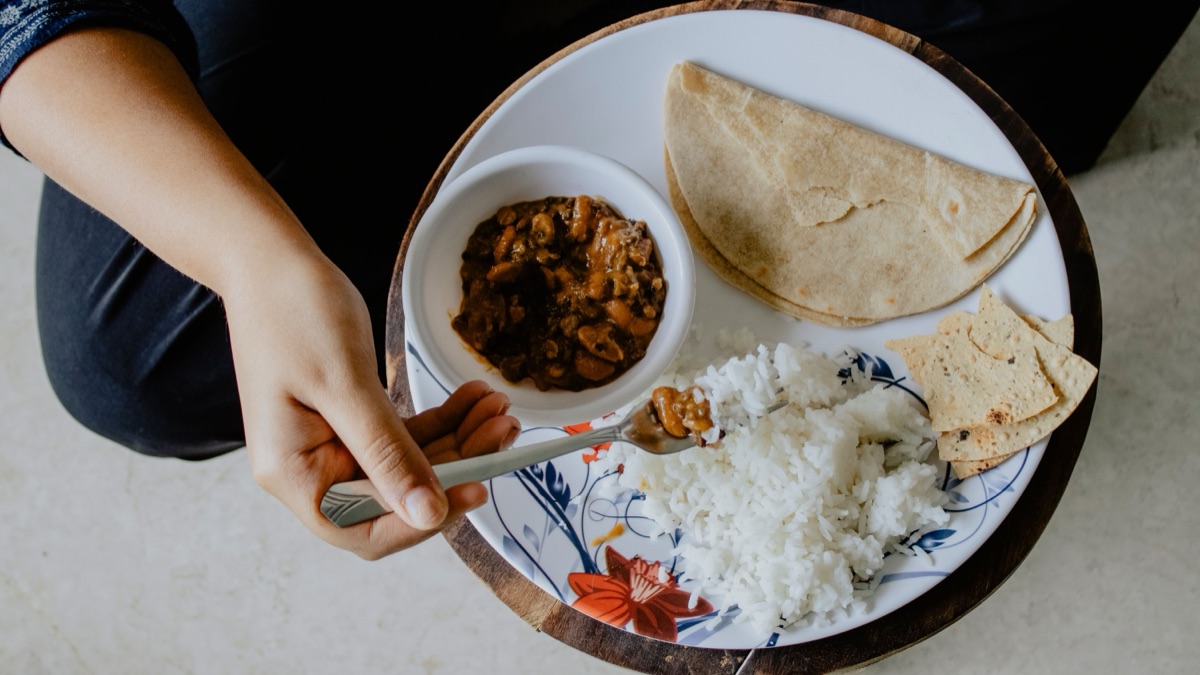
The fix is plain. Three warm meals at roughly the same times, with lunch as the main one. The tradition puts the largest meal around midday, the hours it gives to Pitta, the dosha of fire and digestion. Sit down to eat. Put the phone somewhere else. Finish dinner two to three hours before bed.
Then adjust the food to the pattern you run. If your swings feel anxious and scattered (Vata), lean on warm, soft, slightly oily food: soups, stews, cooked vegetables, rice and a little ghee, with fewer cold drinks, raw salads and dry crackers. If they run hot and irritable (Pitta), favour cooling food such as cucumber, coconut and sweet fruit, and go easy on chilli, fried food and alcohol. If they sink into heaviness (Kapha), keep meals lighter and warmer, with ginger and black pepper, and less heavy dairy. Our guide on what to eat for your dosha goes further.
2. Go to bed and get up at the same times
Ayurveda builds the whole day around a daily routine, dinacharya, and the anchor of that routine is sleep. The tradition favours an early night, before the late-evening second wind, and a wake time near sunrise.
The part most people skip is consistency. A fixed wake time, weekends included, is the easiest place to start. If your sleep moves around by two hours from one day to the next, Ayurveda would expect your mood to move with it. Our post on a simple daily routine you can keep lays out the day, and the Ayurvedic sleep guide covers the night.
3. Breathe out longer than you breathe in
When mood lurches, the breath usually goes first. It gets shallow and fast, or you catch yourself holding it. In Sanskrit, prana means both breath and the breath of life, and the breath is the one part of this you can change in the moment.
The simplest version: sit upright, breathe in gently through your nose, then let the out-breath run slowly and longer than the in-breath, through the nose or softly pursed lips. Keep it easy. Five minutes is enough. Stop if you feel dizzy or light-headed, and ask your provider first if you are pregnant or have a heart or lung condition.
For two classic practices, nadi shodhana and the humming bhramari breath, with full steps and cautions, see our guide to Ayurveda for stress and calm.
4. Warm oil on the skin (abhyanga)
Abhyanga is self-massage with warm oil, and the classical texts prescribe it to settle Vata. In Sanskrit, sneha means both oil and affection, which tells you how the practice is meant to feel.
Warm a little sesame oil, or coconut oil if you run hot. Use long strokes on the arms and legs, circles over the joints, and clockwise circles over the belly. Leave it on for ten to twenty minutes, then take a warm shower without scrubbing it all off. Skip it when you have a fever or an upset stomach, on broken or irritated skin, and on any day it does not feel right, such as the heaviest days of a period. Our step-by-step abhyanga post has the full method. On a busy night, oil your feet before bed and call it done.
Shirodhara, a clinic treatment in which a practitioner pours a steady stream of warm oil across the forehead, is a deeper version of the same idea. You do not need it for anything on this page.
5. Move every day, in daylight if you can
The classical texts set a ceiling on exercise called ardha shakti, about half your capacity. Even that is meant for strong people in the cool months; the rest of the year, and for anyone less robust, they ask for milder effort. The signs of enough are modest: a light sweat on the forehead and under the arms, a slightly dry mouth. Stop before you are tired. A brisk walk counts.
Adjust it to your pattern. Vata does well with steady, rhythmic movement at the same time each day, such as walking or gentle yoga. Pitta needs movement that is not a competition, ideally somewhere green or near water, and not in the midday heat. Kapha needs the most push: a faster pace, a hill, company to keep you going.

6. Close the evening with something warm
Ayurveda wants the day to end, not trail off. Pick a time when work and messages stop. Dim the lights and put screens away. Then have something warm and caffeine-free.
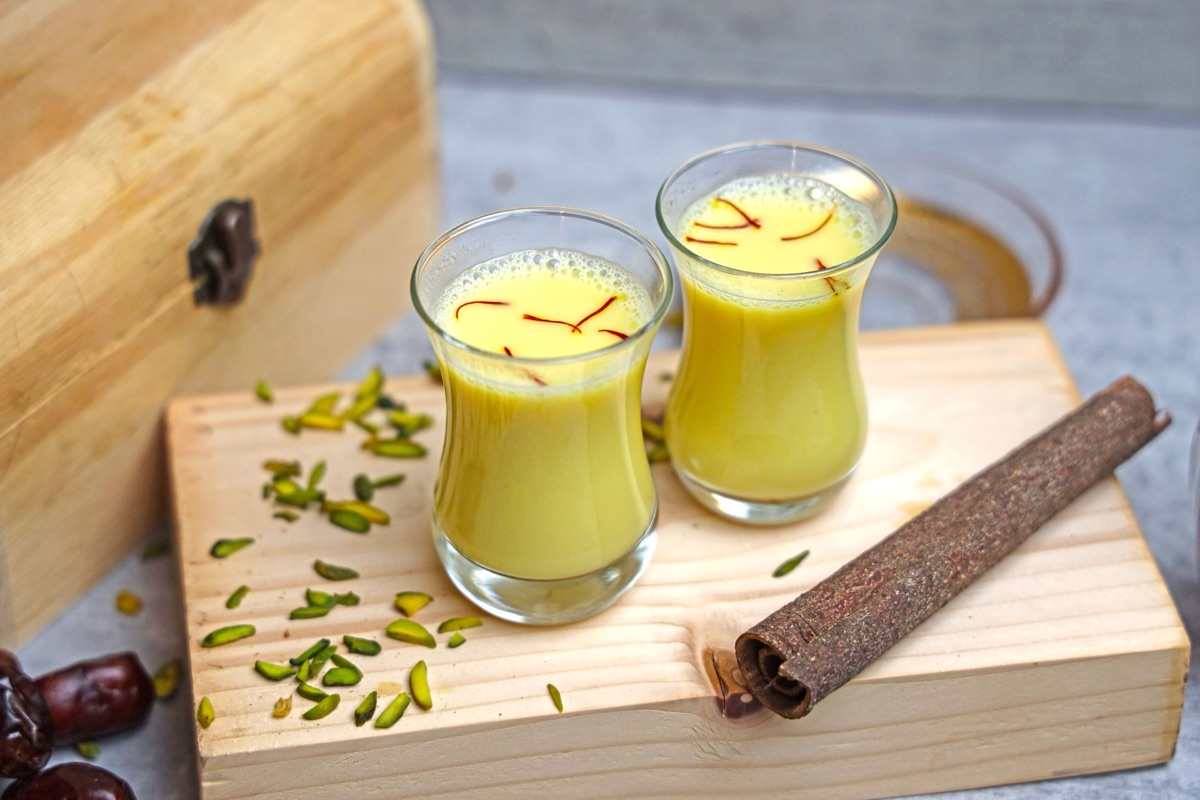
The traditional choice is warm milk, cow or almond, with a pinch of cardamom or nutmeg. Golden milk with turmeric and a little ghee is another. During the day, the tradition's all-purpose drink is CCF tea: cumin, coriander and fennel seeds simmered in water, considered gentle enough for all three doshas.
What about herbs like shatavari and ashwagandha?
Ayurveda has a long list of herbs it uses for the mind and nerves. Shatavari is one of its best-known rasayanas, or rejuvenating tonics, traditionally given to women. Ashwagandha is another revered rasayana. Brahmi belongs to the medhya rasayanas, the group the tradition says acts on the mind, though the name is used for two different plants, bacopa and gotu kola, so one brahmi label may not match another. That is how the tradition uses these herbs. It is not evidence that any of them helps mood swings, and we make no such claim.
The earlier version of this page gave doses and timings for these herbs. We have taken them out on purpose. Herbs are real substances. Products vary in quality, and what suits one person can be wrong for another, especially in midlife, when many people already take medication.
If you are considering any of these, brahmi included, take these questions to your doctor or pharmacist first:
- Could it interact with anything I already take, including thyroid medicine, blood pressure or blood sugar medicine, sleep aids, antidepressants or hormone therapy?
- Is it suitable if I am pregnant, breastfeeding or trying to conceive?
- Is it suitable given my own health history, including my liver, my thyroid and any hormone-sensitive condition?
- How will we judge whether it is helping, and when should I stop?
An Ayurvedic practitioner can tailor herbs to your constitution. Tell your doctor about anything they suggest, too.
What the evidence says about movement, sleep timing and breath
Ayurveda's case for these habits rests on tradition. Modern research asks a narrower question, and it has its own limits. Three pieces are worth knowing.
Movement. In 2018, Sammi Chekroud and colleagues analysed a US government health survey of about 1.2 million adults. People who exercised reported roughly one and a half fewer days of poor mental health in the past month than people who did not, after matching for age, income, physical health and other factors. More was not always better: the strongest links came with sessions of about 45 minutes, three to five times a week. The limits matter. It was a cross-sectional survey, with each person reporting their own bad days once, so it shows a link, not a cause. People who feel better may simply move more.
Sleep timing. In a 2021 study, Yu Fang and colleagues followed 2,115 first-year doctors through their internship. They wore activity trackers and rated their mood each day on a phone app. When their sleep length and wake time shifted less from one day to the next, they rated their next-day mood higher. The limits: these were young doctors in an unusually punishing year, the study observed rather than tested anything, and the effects were small. Still, it points the same way as Ayurveda's insistence on a regular clock.
Breath. In a 2023 trial led by Melis Yilmaz Balban, 108 adults, most of them university students, were randomly assigned to five minutes a day of one of three breathing exercises or of mindfulness meditation, for a month. In every group, people reported less anxiety and less negative mood after their daily session than before it. The exercise built on long, slow out-breaths, called cyclic sighing, lifted positive mood more over the month than meditation did. The limits: it was small, young and run remotely, so nobody watched how people practised; people with serious psychiatric conditions were excluded; it was registered after the fact, with no follow-up beyond four weeks, and the authors call for a larger trial.
None of these studies tested Ayurveda. They are pointers, not proof, and they point in the same direction as the tradition: a steadier day, a moving body and a slower breath.
When are mood swings a concern?
Feeling flat when you are tired, short-tempered when you are hungry and tearful when you are overloaded is ordinary. Some patterns are not. Please see your doctor or another qualified clinician if:
- Low mood, irritability or swings have been there most days for two weeks or more, or they are severe or distressing.
- They are getting in the way of your work, your relationships, your sleep or your eating, or making it hard to get out of bed.
- You have stretches of unusually high, elated, irritable or energised mood alternating with very low, hopeless stretches.
- Premenstrual mood changes are strong enough that you miss work or plans.
- The swings arrived alongside other midlife changes, such as irregular periods, hot flushes or new sleep trouble. Mood swings and irritability are among the recognised symptoms of perimenopause, the years leading up to the last period, and your provider can talk you through the options.
- You are leaning on alcohol, food or pills to get through the day.
If you are having any thoughts of harming yourself, do not wait for an appointment. Contact your local emergency services now, or in the US call or text 988, the Suicide and Crisis Lifeline. Outside the US, call your local emergency number or a crisis line where you live.
If you already have care, keep it. Do not stop or change a prescribed medicine on your own. The habits on this page are meant to sit alongside medical care, not replace it. This article is for education only and is not medical advice.
Where to start this week
Pick the one habit that would change your day most, and keep only that for two weeks. For most people with Vata-style swings, it is lunch at the same time every day, or a fixed wake time.
Keep a short note each evening: what time you ate, slept and woke, and how your mood ran. After two weeks you will see your own pattern more clearly than any article can show you. If you do see a doctor, bring the notebook. It is useful there too.
Mood will always move. The aim is not a flat line. It is a day steady enough that the swings stop running it.