
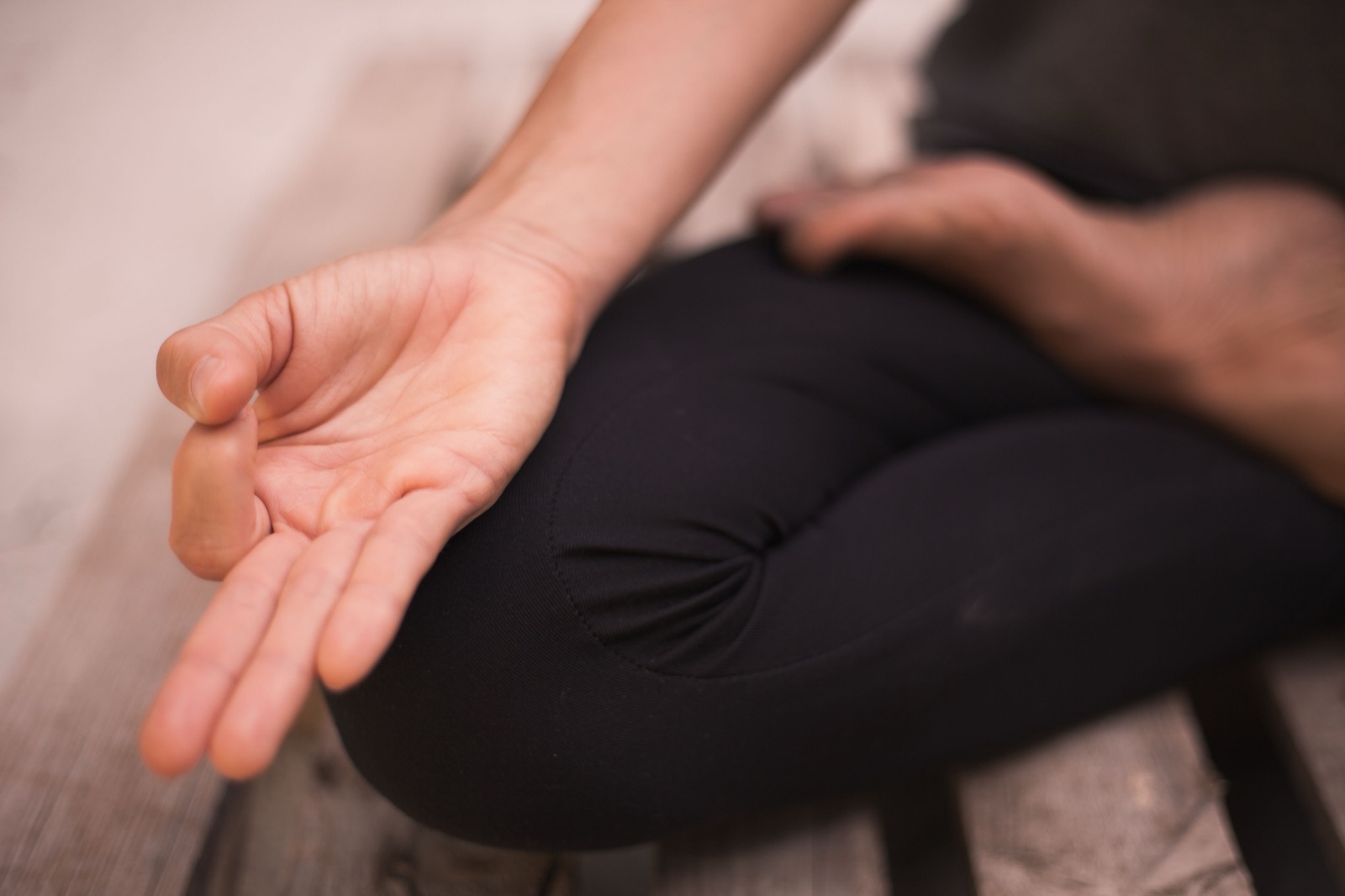
Ayurvedic practices for a calm mind start with the body, not the mind: the breath, a sound, your own hands. This page teaches five of them step by step. Nadi shodhana, alternate nostril breathing, is the tradition's pick for a scattered mind. Sheetali, a breath drawn in over a curled tongue, is the traditional choice when you feel hot and irritable. So hum gives a looping mind two syllables to hold. Bhastrika, a strong bellows breath, is for heaviness and fog, and it is not for everyone. Tala hrida is gentle pressure in the middle of your palm. Pick one, give it five minutes, and do it again tomorrow.
Calm is something you return to, not something you force
There are moments when the mind simply will not settle. Not because something is wrong, but because something has not yet been processed, softened or released.
You cannot order your mind to be quiet. You have tried. "Calm down" is one more thought in a head that already has too many.
Ayurveda comes at it from the other side. Calm is not forced. It shows up when the body, the breath and your attention come back into rhythm. So you do not argue with your thoughts. You change something you can control, like the length of an out-breath, and the mind follows.
Choose a practice by how you feel today
Ayurveda balances a quality with its opposite, so the right practice depends on the state you are in right now.
- Restless, scattered, worried, thoughts that will not land. That is the airy, moving quality Ayurveda links with Vata. Choose nadi shodhana, so hum or tala hrida. All three are slow and steadying.
- Hot, sharp, impatient, short with people. That is Pitta's heat. Choose sheetali.
- Heavy, dull, foggy, hard to get going. That is Kapha's heaviness. Bhastrika is the practice that moves things, if it is safe for you.
Your usual state often mirrors your constitution. How to meditate for your dosha goes further into that, and Ayurvedic mindfulness explains the thinking underneath: the doshas, the gunas, and prana, the life force Ayurveda says moves with the breath.
Before you start
- Seat. A chair with your feet flat on the floor, or a cushion. Spine tall, shoulders heavy, jaw loose.
- Stomach. The tradition prefers breath practice on an empty stomach. Practice before eating, or leave a good gap after a meal.
- Effort. Nothing here should hurt, strain or make you dizzy. If it does, stop and breathe normally.
1. Nadi shodhana: alternate nostril breathing, steps and timing
Use it for: a mind that feels scattered or reactive. It is slow and even, and it is the easiest of the five to start with.
Your hand. Rest your left hand in your lap. Bring your right hand to your face and fold your index and middle fingers into your palm. Your thumb will close your right nostril. Your ring finger will close your left. If folding those two fingers is awkward, rest them lightly between your eyebrows instead. If your arm tires, prop your right elbow on your left hand.
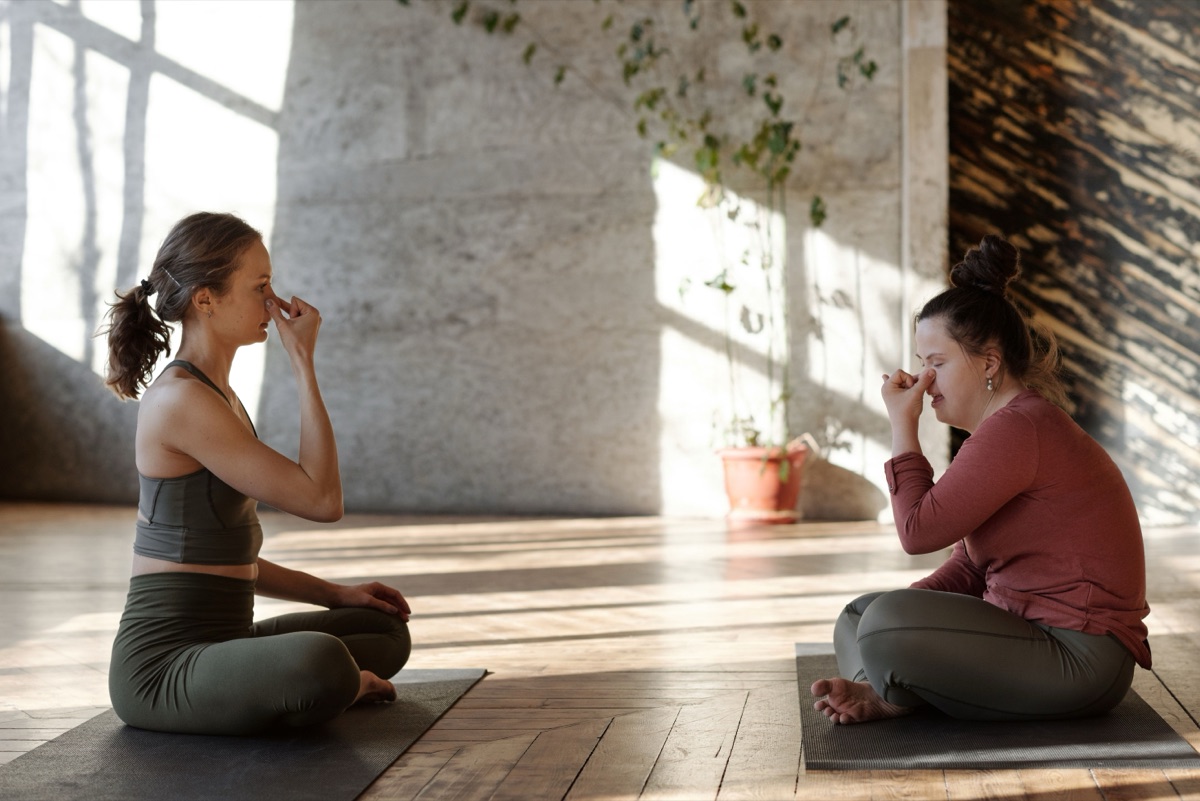
- Sit tall. Take two ordinary breaths, then breathe out fully.
- Close your right nostril with your thumb. Breathe in slowly through the left for a count of four.
- Close the left nostril with your ring finger and lift your thumb. Breathe out through the right for a count of four to six.
- Keep the left side closed. Breathe in through the right for four.
- Close the right with your thumb and lift your ring finger. Breathe out through the left for four to six.
- That is one round. You finish on the side where you began.
How long: five rounds on the first day. Build to three to five minutes. Then lower your hand and sit with your eyes closed for one more minute.
Keep it easy. The counts are a guide, not a test. If four feels long, use three. Some versions add a breath hold; leave it out until the simple version feels effortless, and learn it from a teacher. A light touch closes a nostril. If one side is blocked, breathe through the open side and keep the rhythm in your attention.
2. Sheetali: the cooling breath, and the version for tongues that will not curl
Use it for: the heated state. Irritation, impatience, a flash of temper, the sense that everything is too loud. Ayurveda calls this breath cooling, and keeping a cool mind in Pitta season puts it alongside the other habits that settle Pitta.
- Sit tall. Part your lips and push the tip of your tongue just past them.
- Roll the sides of your tongue up into a tube, like a drinking straw.
- Breathe in slowly through the tube. You will feel the air pass cool over your tongue.
- Draw your tongue back in, close your mouth, and breathe out slowly through your nose.
- That is one round. Do eight to ten, at an unhurried pace.
If your tongue will not roll: not every tongue does, and you are not doing it wrong. Use sheetkari, also spelled sitkari, instead. Bring your top and bottom teeth lightly together, part your lips, and breathe in slowly through the gaps between your teeth with a soft hiss. Close your mouth and breathe out through your nose. Same pace, same number of rounds.
Skip it when you already feel chilled, or if cold air at the back of your throat makes you cough, and in dusty or smoky air.
What "cooling" means here. In Ayurveda the word describes the effect on a heated mind. Do not expect a thermometer to agree. When researchers measured 17 healthy young men during 18 minutes of sheetali and sitkari, the temperature taken at the armpit went up during both practices, and so did the oxygen the men used. The authors wrote that their results did not support describing these breaths as cooling. One small study, in young men, measuring the body and not the mood. Judge sheetali by what you came for: a temper that is less sharp afterward.
3. So hum: a meditation you can do anywhere
Use it for: a busy, looping mind that needs something to hold. No hand positions, no counting, no special breath. It works on a train.
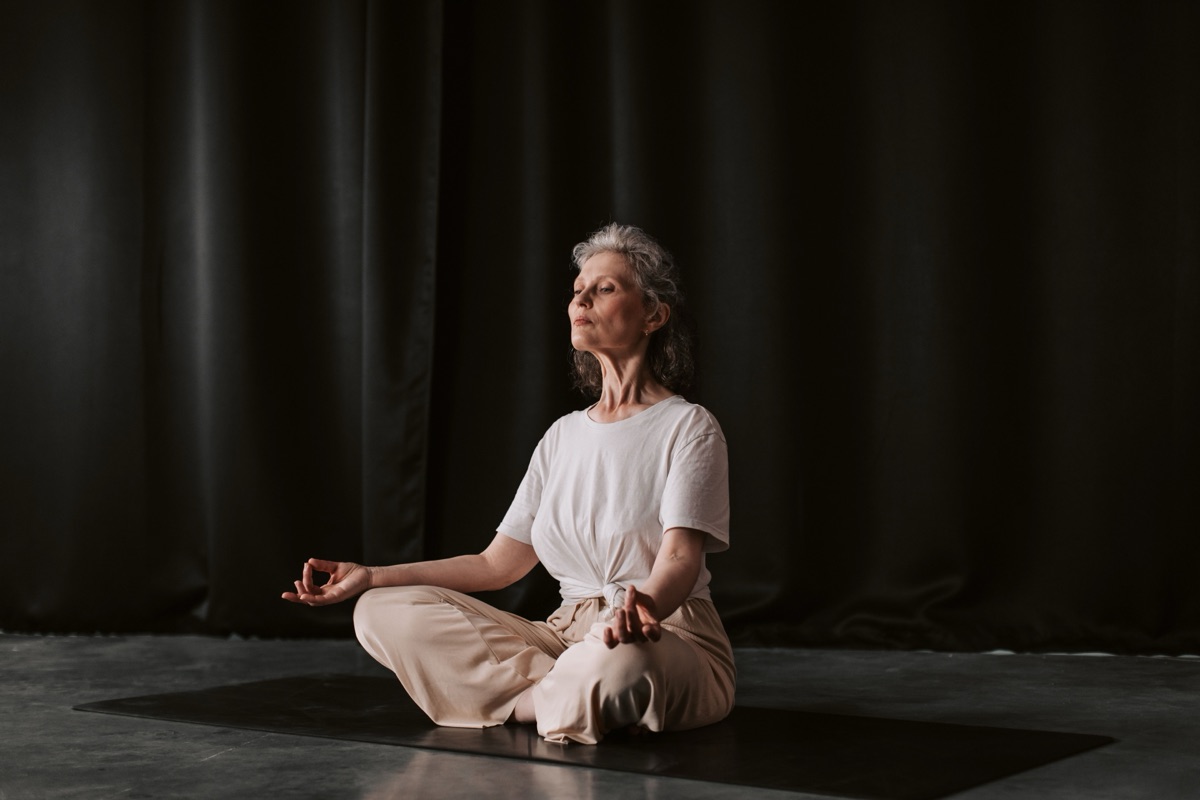
So hum, written so'ham in Sanskrit, is a mantra teachers usually translate as "I am that." The dictionary sense is plainer: "I myself." You do not need to believe anything about either translation to use it. The sound is the tool.
- Sit comfortably and close your eyes. Let your breath set its own pace. Do not deepen it on purpose.
- As you breathe in, hear the word "so," silently, in your mind.
- As you breathe out, hear "hum."
- When you notice you are thinking about something else, and you will, come back on the next in-breath. No scolding. Coming back is the practice.
- To finish, let the words go and sit for a minute before you open your eyes.
How long: five minutes to start, ten or twenty if you like it. Use a gentle timer, not the clock.
Your thoughts will not disappear. The change is smaller and more useful: you go from being carried by them to watching them pass. Soothe the Noise Within uses So Hum as a two-minute morning anchor, which is a fine way to begin.
4. Bhastrika: the bellows breath, steps and who should skip it
Use it for: the heavy state. Dull, foggy, slow, the afternoon slump. Bhastrika is the odd one out on this list. It is not calming while you do it. It is rousing. Ayurveda uses it to clear heaviness so that clarity has room.
Read this before the steps. Skip bhastrika, or ask your doctor first, if any of these apply to you:
- You are pregnant.
- You have high blood pressure or a heart condition, or you take medication for either.
- You have epilepsy or have ever had a seizure.
- You have had recent surgery, especially on your belly, chest, eyes or ears, or you have a hernia.
- You get dizzy or faint easily, or fast breathing tends to set off panic for you.
- You have a lung or breathing condition, or a cold that has blocked your nose.
If any of those fit, choose nadi shodhana. Leaving bhastrika out is a perfectly good decision.
- Sit tall, hands on your knees, on an empty stomach.
- Breathe in through your nose so your belly and ribs expand. Then breathe out through your nose with the same force. In and out are equal, active and audible, like a bellows.
- Go slowly at first, about one full breath every second or two. Speed is not the goal. Keep your face, neck and shoulders soft.
- After ten breaths, return to normal breathing and rest for thirty seconds.
- That is one round. Do no more than three.
Stop straight away if you feel lightheaded, tingly, panicky or short of breath. Breathe normally and stay seated until it passes. Next time, go slower and take fewer breaths.
When: morning or early afternoon. Not near bedtime, and not after eating.
If two teachers show you two different bhastrikas, neither has made it up. A 2022 paper set the instructions in two traditional hatha yoga texts, the Hatha Yoga Pradipika and the Gheranda Samhita, beside 25 PubMed-indexed studies of bhastrika and reported that the research differed from the texts on how deeply to breathe. The authors noted that differences in how a breath is practiced could change what it does. Start with the moderate version above.
5. Tala hrida: calm through the palm, as the tradition teaches it
Use it for: the moments when you cannot close your eyes or breathe out loud. A meeting. A waiting room. The car, before you walk in somewhere hard.
Ayurveda maps vital points on the body called marma. Tala hrida, also written talahridaya, joins the Sanskrit words for palm, tala, and heart, hridaya, a word that can also mean the centre of something. The point sits in the middle of your palm, in line with your middle finger: make a loose fist, and it is roughly where the tip of your middle finger lands. Marma practitioners link it with the heart. That is tradition, not a tested effect, and we offer it as tradition.

- Rest your left hand palm up in your lap or on a table.
- Place your right thumb on the point in the middle of your left palm, and let your right fingers cradle the back of that hand.
- Breathe slowly through your nose. Press gently as you breathe out, and ease off as you breathe in. Firm enough to feel, never enough to hurt.
- Keep that rhythm for one to two minutes, letting each out-breath grow a little longer than the in-breath.
- Switch hands and repeat.
If your hands or wrists are sore, use the lightest touch or skip it. It is almost quiet enough to overlook, and that is its use: you can do it anywhere, and nobody needs to know.
What research has measured, and what it has not
Most of this page rests on Ayurvedic and yogic tradition, and we have said so where it matters. Research on these practices is small. Beyond the papers above, one trial speaks most directly to calm.
In a randomized crossover trial, 45 adults with an average age of 24 came in on five separate days. In random order, they did 15 minutes of right-nostril breathing, left-nostril breathing, alternate nostril breathing, breath awareness, or quiet seated rest. Their anxiety questionnaire scores fell after alternate nostril breathing, after each single-nostril practice, and after quiet seated rest. Some effects, on heart rate variability and blood pressure, differed depending on which nostril was more open at the start.
Two things follow. These were single sessions in young adults, so the trial says nothing about weeks of practice or about women in their fifties and sixties. And anxiety scores also fell after fifteen minutes of simply sitting quietly. That does not make the breath pointless. It suggests part of what helps is stopping at all, and a breath practice is a structured way to stop.
None of these practices is a treatment for a medical condition. If racing thoughts, low mood or broken sleep are wearing you down, talk to your doctor. A few minutes of breath can sit next to that care. It does not replace it.
Start with one
You do not need all five. A menu of five is how people end up doing none.
Pick the one that matches how you feel on most days. Do it for five minutes, at the same time, every day for a week. Morning is the easiest to keep, because the day has not had a chance to get in the way. The Ayurvedic morning routine shows where a few minutes of breath and stillness fit, and the nasal oil ritual in Clearing the Mind Each Morning sits naturally beside it.
Mental calm is not something you achieve once. It is something you return to. Sometimes through the breath, sometimes through a sound, sometimes through your thumb in the middle of your palm. Each return is small. Over time they add up to a mind that does not need controlling, because it is learning to settle on its own.