
The Sleep Protocol · 10 Days
You sleep seven hours.
You wake up feeling like you slept four.
Ten evenings. One practice per night, on your schedule. Type-specific for your dosha. By Day 10: a complete evening wind-down you'll still be doing at Day 60.
Claim My SpotThe problem, in your words
You've tried the list.
Melatonin. Magnesium glycinate. Blue-light glasses. Phone in another room. A cooling mattress pad. A white noise machine. Calm. Yoga Nidra on YouTube. A weighted blanket. "Sleep hygiene" articles that told you things you already knew.
Some of it helped for a week. Then it stopped. And the part that really gets under your skin: the tracker says you got seven hours. You know what seven hours is supposed to feel like. This isn't it.
"I've tried a lot. Nothing sticks."
"I don't know what to do. It's confusing."
"I start strong then fall off."
That's 67% of you, combined. That's not a willpower problem. It's a structure problem.
The variable you haven't tried
Ratricharya: the evening practice
most modern people don't have.
You probably have some version of a morning routine. Now think about your evening. What's the sequence your body recognizes as "the day is ending"? For most people: there isn't one.
The 10 p.m. Pitta window. From 6 to 10 p.m. is Kapha time: heavy, slow, drowsy. That wave of tiredness around 9 p.m.? That's your body saying, go to bed now. At 10 p.m., Pitta activates. The second wind. The burst of energy. The sudden urge to clean the kitchen at 11:30.
That second wind is not productivity. It's dysregulated Pitta. And it's the single most common reason this audience struggles to fall asleep.
Ratricharya is the evening counterpart to dinacharya. Light dinner well before bed. A wind-down window. Padabhyanga: warm oil on the soles of the feet, two minutes per foot. Cotton socks. Lights out. It's a sequence that replaces the nothing you're currently doing between dinner and collapse.
The mechanism
The 10 p.m. rule: the thing
your sleep tracker can't tell you.
Your tracker measures what happened. It cannot tell you why 10:30 p.m. feels more awake than 9 p.m. did. Ayurveda mapped that mechanism a long time ago, and modern sleep science found the same wall.
The 10 p.m. handoff: ride the Kapha descent before the Pitta fire arrives.
6 to 10 p.m. The Kapha descent.
In the classical daily rhythm, the hours after sunset are Kapha: heavy, slow, grounding. The drowsy wave that hits around 9 p.m. is the descent working. It is the open door to sleep. Most people answer it with one more episode.
10 p.m. The Pitta fire lights.
At 10, Pitta takes over. Its overnight job is transformation: repair, digestion, processing. If you're horizontal, that fire works on your body. If you're upright and scrolling, it works on your to-do list. That's the second wind. It is not energy. It is repair fuel being burned in the wrong room.
The tradition that mapped it.
This is the dinacharya framework preserved in the Ashtanga Hridayam, the classical Ayurvedic text on daily routine. Evening conduct, meal timing, wind-down: prescribed in sequence, by hour, over a thousand years before anyone owned a wrist tracker.
The science that found the same wall.
Sleep researcher Peretz Lavie (1986) documented a late-evening stretch where the brain actively resists falling asleep, and named it the "forbidden zone for sleep." Dijk and Czeisler (1995) showed the circadian pacemaker promotes wakefulness in the hours before habitual bedtime. Different language. Same wall. Miss the window, hit the zone.
The Sleep Protocol is built around that window. Not more willpower at 11:30. A sequence that gets you through the door at 9:30, before the wall goes up.
Introducing
The Sleep Protocol
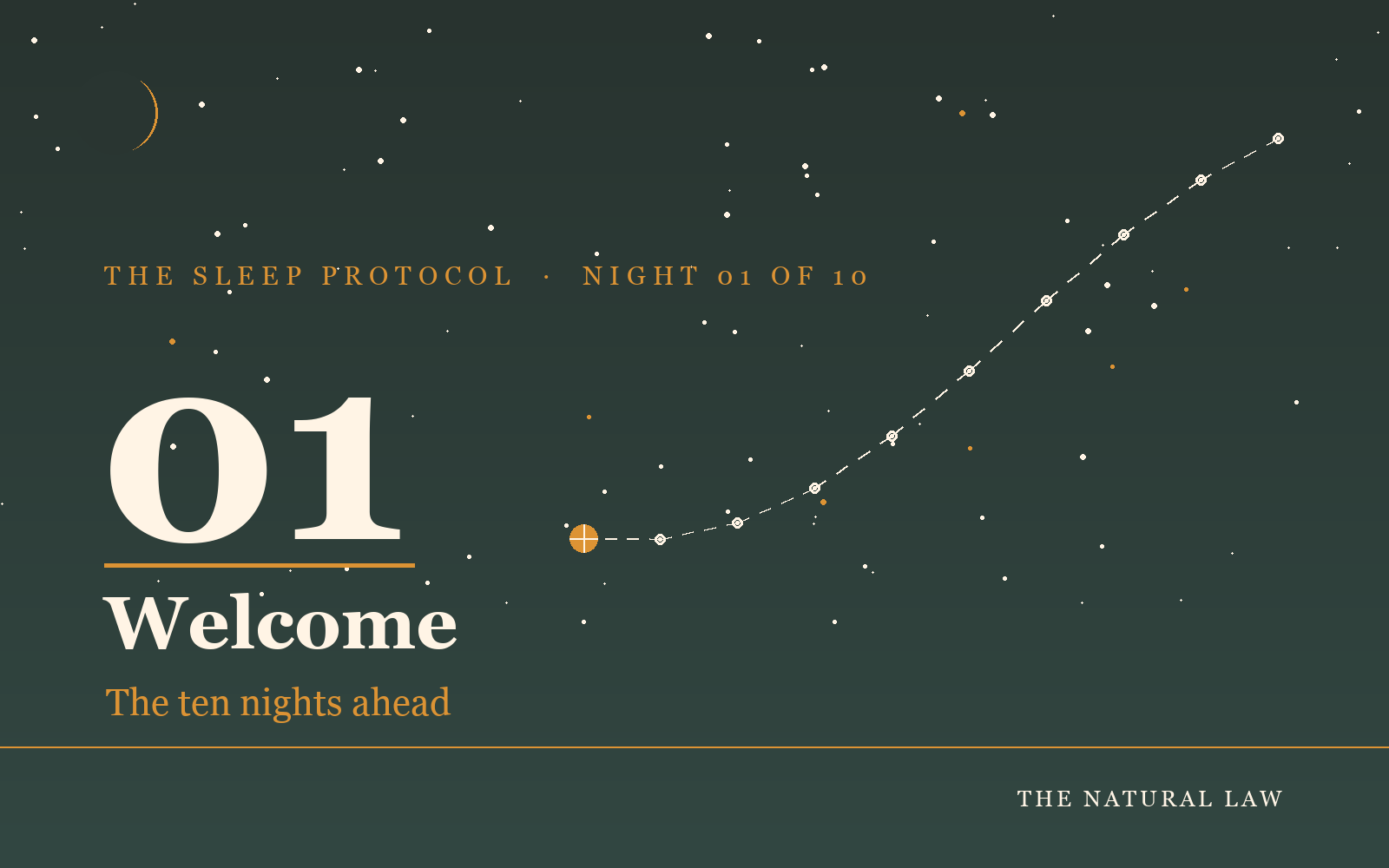
Ten days. One practice per night, fully self-paced. Type-specific. No live attendance required. Do it when you get in bed. Fifteen minutes or less.
Short, direct teachings, one per night. The Ayurvedic mechanism, then the practice. Watch on your phone before you start.
Same teaching, audio-only, in Amish's voice. For the nights you'd rather close your eyes and listen.
~30 pages. Ratricharya quick-reference, oil guide by dosha, breathing techniques, the 10 p.m. rule.
Night 1 sleep intake, Night 5 mid-check, Night 10 outtake + the "what to keep" decision sheet.
The full ratricharya sequence on one page: your times, your oil, your breathing technique. Put it on the nightstand.
What you do NOT get: Not a 50-hour video library. Not another subscription. Not a schedule you have to keep (the one live Q&A is optional and recorded). Not more screen time than you want. Less phone, more practice. Fifteen minutes. In bed. Lights off after.
The Arc
Five days to see what's stealing your sleep.
Five days to install what replaces it.
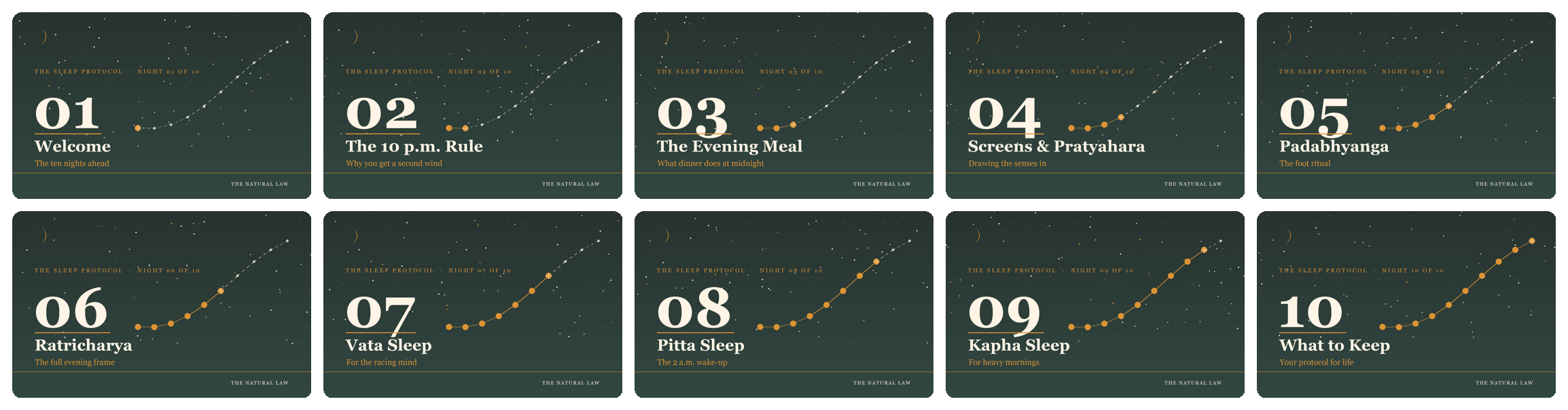
Module 1: Audit
Days 1–5
- Day 1: Map your current pattern through the Ayurvedic lens
- Day 2: The 10 p.m. rule, why you get a second wind
- Day 3: What you ate, when, and how it's sitting at midnight
- Day 4: Screens, light, and sensory withdrawal
- Day 5: Padabhyanga, the practice most people skip
By Day 5: identified your dominant sleep disruption pattern, started padabhyanga, moved dinner earlier by 30+ minutes.
Module 2: Install
Days 6–10
- Day 6: Ratricharya, the full evening practice
- Day 7: Vata sleep, racing mind, 2 a.m. waking
- Day 8: Pitta sleep, can't fall asleep, hot and restless
- Day 9: Kapha sleep, oversleeping, grogginess
- Day 10: What to keep, what to drop, the next layer
By Day 10: a complete ratricharya sequence personalized to your dosha, practiced 5+ consecutive nights.
Everything included
$429 of materials, teaching, and a live call with Amish.
All of it built in.
The ten nights come with everything you need to run them. Nothing sold separately. Nothing unlocked later. One price, and you keep all of it for life.
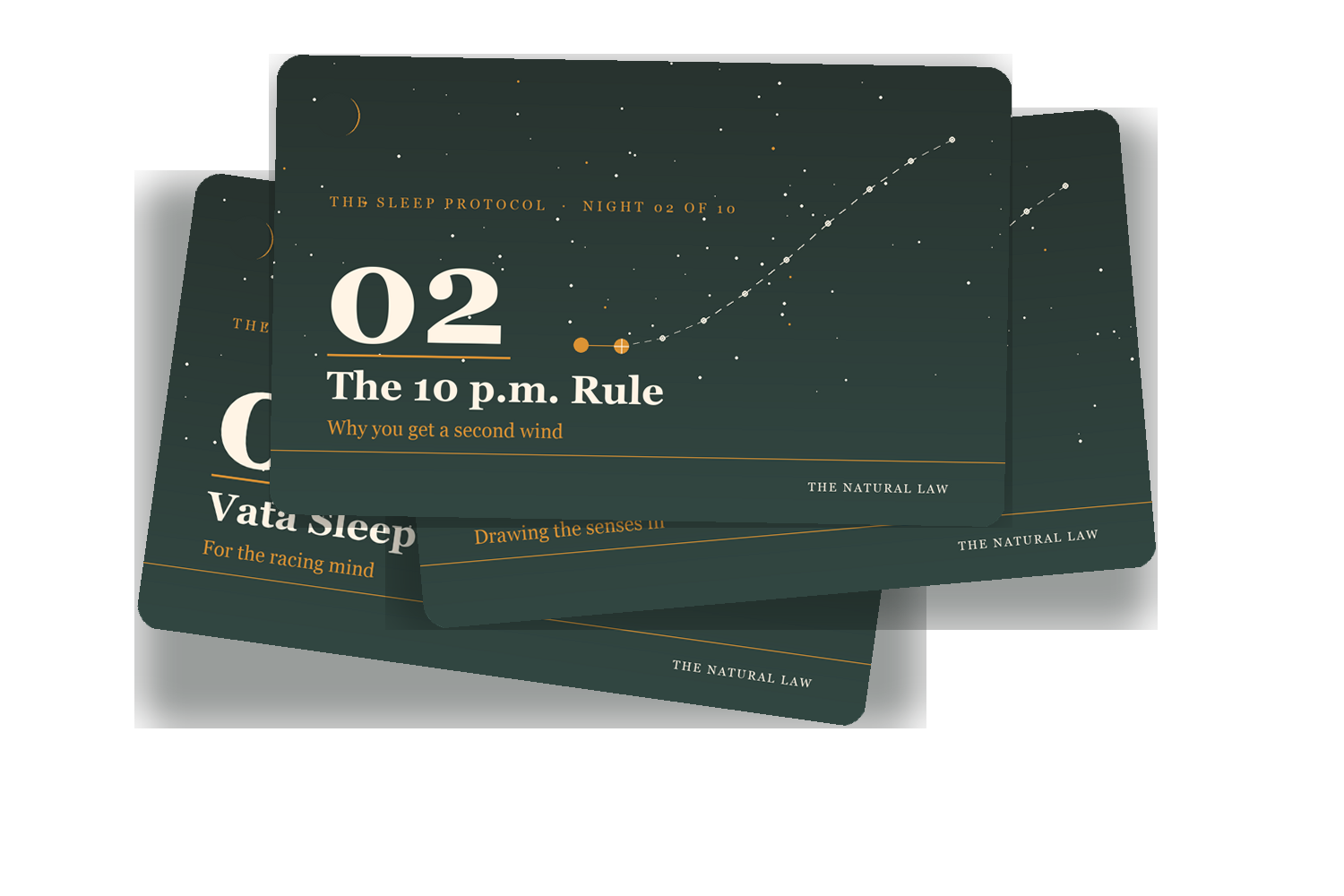
These are not printouts. Every night ships with a designed companion guide: the teaching, the practice, the sources. You keep all ten.
Included 01
10 designed Night Companion GuidesOne per night. The teaching, the practice, the why, laid out so you can do the night without rewatching anything. Designed, not slapped together.
$67 value
Included 02
The Sleep Protocol WorkbookNight 1 intake, Night 5 mid-check, Night 10 outtake. The before-and-after in your own handwriting. That is the proof.
$19 value
Included 03
The Complete Teaching GuideThe full reference: the ratricharya sequence, the oil guide by dosha, the breathing techniques, the 10 p.m. rule. Keep it past Night 10.
$47 value
Included 04
The Evening Practice CardOne page. Your times, your oil, your breath. Lives on the nightstand so the practice survives a tired brain.
Included
Included 05
10 guided evening audiosAmish walks you through each night in his own voice. Press play, close your eyes, follow along.
Included
Included 06
10 teaching videos + dosha-specific Nights 7 to 9Night 7 Vata, Night 8 Pitta, Night 9 Kapha. The protocol bends to your type instead of pretending everyone sleeps the same.
Included
Included 07
The Dosha Quiz + your type profileFree on the site, built into the protocol here: your result decides how Nights 7 to 9 run. Take it before Night 1 if you haven't.
Free, built in
Included 08
Lifetime access + every future updateOne payment. Every improvement to the protocol lands in your space at no extra cost. No subscription, ever.
Included
Bonus 09
The TNL Wellness CollectionTen master courses from ten master practitioners, the same bonus library Gut Reset students unlocked. Yours at enrollment, yours to keep. Full lineup below.
$199 value
Bonus 10
Live Q&A call with AmishFriday, August 7 at 12pm PT. Bring your evening-routine questions and your dosha, wherever you are in the ten nights. Can't make it? It's recorded and posted in your space the same day.
$97 value
Companion Guides $67 + Workbook $19 + Teaching Guide $47 = $133 of materials. Built in. Plus the audios, the videos, the card, the quiz, and lifetime access. Programs this size sell the guides alone for more than the whole protocol costs.
Bonus · The TNL Wellness Collection
10 master teachers. Lifetime access.
When you enroll in the Sleep Protocol, you also unlock The Natural Law Wellness Collection: a curated library of teaching from ten master practitioners, normally sold separately for $199. Yours to keep whether or not you finish the ten nights.
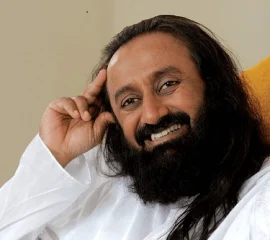 Sri Sri Ravi Shankar Global Spiritual Leader
 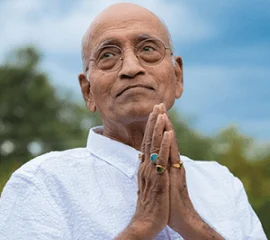 Dr. Vasant Lad Ayurvedic Physician & Professor
  Dr. Trupti Gokani Neurologist · Ayurveda Author
  Sahara Rose Podcast Host · Author · Speaker
 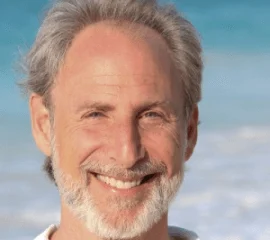 Dr. Marc Halpern President, California College of Ayurveda
 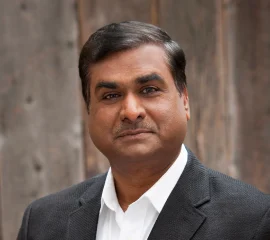 Dr. Suhas Kshirsagar Ayurvedic Physician
 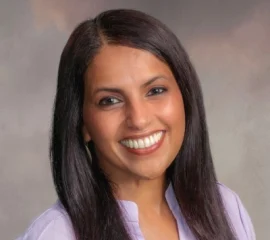 Sankari Wegman, PhD Ayurvedic Clinician
 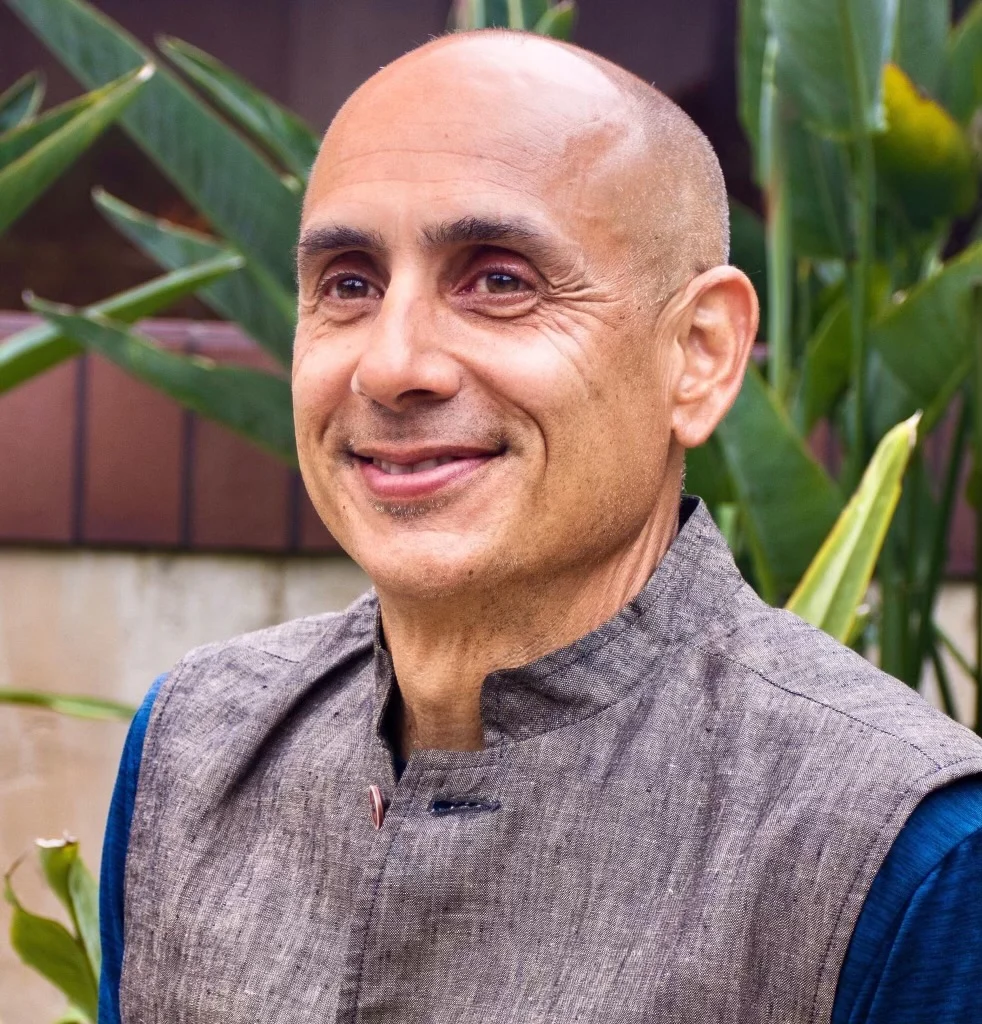 Mas Vidal Director, Dancing Shiva School of Ayurveda
  Nisha Khanna, MD Internist · Functional Medicine · Ayurveda
  Paul J. Morehead, PhD Associate Dean, Maharishi International University
 Wellness Collection courses unlock at enrollment. Not a trial: yours to keep regardless of whether you complete the ten nights.
Who teaches this
Every night, taught by Amish.

Founder · Lead Teacher
Amish Shah
Founder of The Natural Law
I built this protocol from the same classical sources I used on myself. I spent two decades inside the system before teaching it, completed full Ayurvedic Panchakarma, and trained extensively across Ayurveda, yoga, plant medicine, and contemplative practice. The ten sleep teachings are recorded in my own voice, one per night. You hear the mechanism, then you do the practice. That's the whole format.
200-hour yoga certified · Hoffman Process graduate · Transcendental Meditation practitioner · Vipassana retreats · Wim Hof Method · Daily ritual practitioner · Author with Hachette (book launching January 2027)
In their words
What students say about learning with The Natural Law.
The Sleep Protocol is new, so these aren't sleep reviews. They're students of our other protocols, on what it's like to learn this way.
"The Natural Law has completely changed the way I look at health. Everything they share is simple, clear, and makes so much sense."
Jon S.
"The Natural Law is a breath of fresh air. The way they explain things just clicks. It's not overwhelming, it's practical and inspiring."
Chris I.
"What I love most about The Natural Law is how easy they make everything to understand. I always thought Ayurveda was complicated, but through their content and quizzes I finally get it."
Laura P.
Why this matters past Night 10
How you sleep now is how you age.
In Ayurveda, deep sleep is where ojas is built: the reserve your body draws on for immunity, recovery, steadiness, and the way your face looks at sixty. The people who age gracefully are rarely the ones with the biggest supplement cabinet. They're the ones whose evenings end on time, whose repair cycle actually runs, night after night, for decades. Sleep is the number one ojas builder. Every night you sleep badly, you spend the reserve. Every night you sleep deeply, you refill it. Ten nights won't make you younger. They will change which direction you're compounding.
Start Building Ojas Tonight →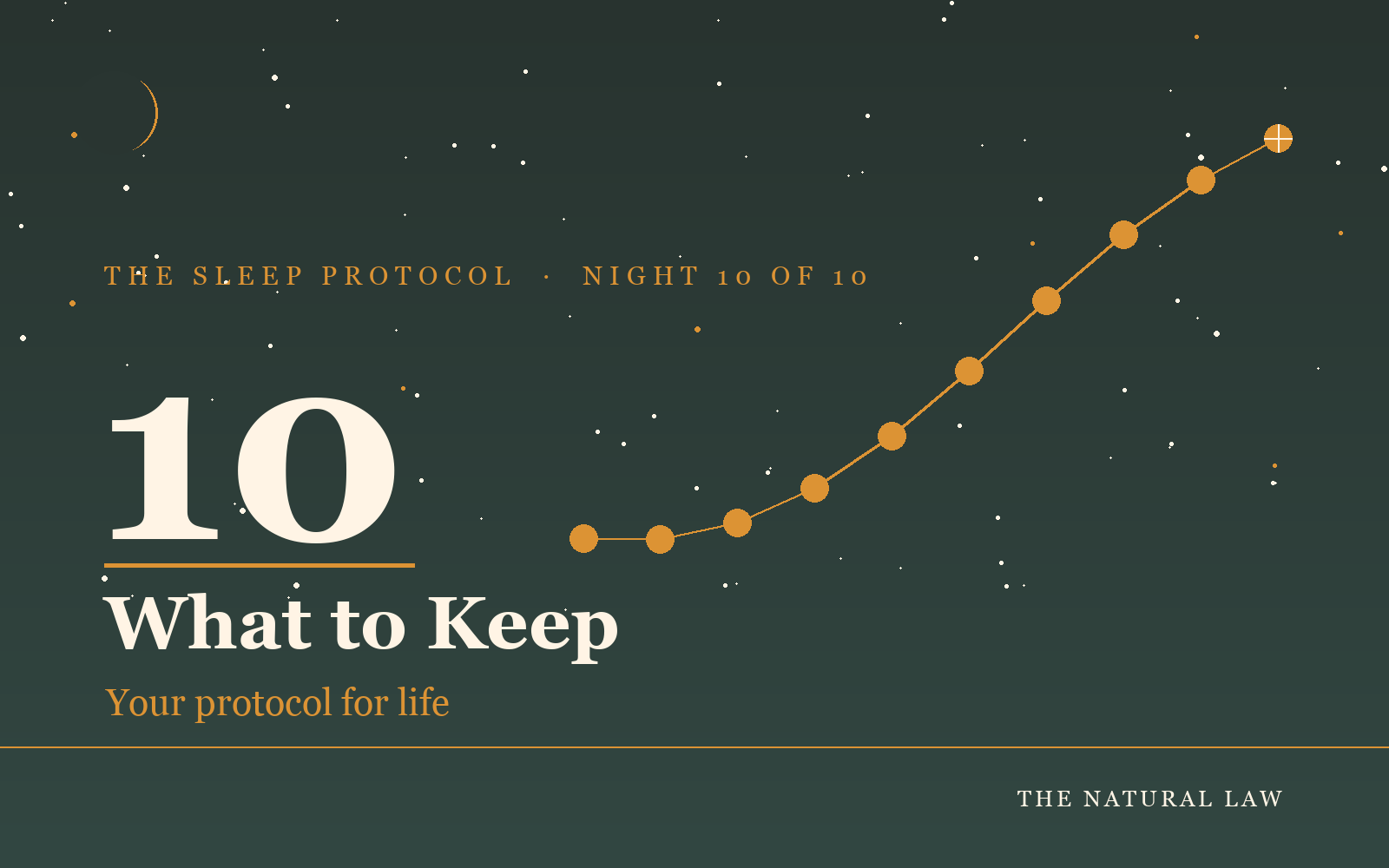
Who this is for
Is the Sleep Protocol right for you?
For you if…
- Your tracker says seven hours but your body says four
- You've tried melatonin, magnesium, screen rules, still not sleeping well
- You wake at 2 a.m. with a racing mind, or can't fall asleep before midnight
- You want a hands-on evening practice, not another thing to read
- You know your dosha (or will take the free quiz before starting)
Not for you if…
- You have a diagnosed sleep disorder. See your sleep specialist
- You're looking for a medical protocol for a clinical condition
- You want a supplement stack, not a practice
- You don't have 15 minutes in the evening
Pricing
Ten days. One evening practice. One price.
Early-bird pricing ends in --:--:--. After that, the price is $47.
First 48 hours only
Single payment. No subscription. No auto-renew. Ten dollars off, then it goes to $47 and stays there.
Claim My Spot7-day full refund. No questions, no hoops
Standard price
Same protocol. Same access. Same everything.
Claim My Spot7-day full refund. No questions, no hoops
Risk reversal
If ten nights don't shift something real,
every dollar back.
Seven days, no questions. Do the practice. If you don't fall asleep faster, or the 2 a.m. wake-ups don't soften, or the mornings don't feel different, email info@thenaturallaw.com within seven days and we refund you 100%. No friction, no interview, no retention scripts. This isn't because we doubt the protocol. It's because if you do the practice and it doesn't move, you should get your money back.
Questions
The honest answers.
I already take melatonin. Do I have to stop?
No. The Sleep Protocol asks you to change nothing about your medication or supplements. It is a behavioral practice: meal timing, sensory load, oil, breath. Many people find they reach for less over time. Any change to what you take is a conversation with your doctor, not with us.
I've tried melatonin, magnesium, and every sleep hygiene tip. Why would this be different?
Because those are isolated fixes: one molecule, one mineral, one input. Ratricharya is the system. It addresses dinner timing, sensory load, nervous system state, and the physical practice of grounding the body before bed, matched to your dosha type. One practice per night, in order, for ten nights.
What if I go to bed at midnight?
Start where you are. Night 1 asks for observation, not a new bedtime. Over the ten nights the practice pulls your evening earlier because you start catching the 9 p.m. Kapha wave instead of riding through it. Nobody forces a 9:30 bedtime on you. Your body volunteers one.
Is this religious?
No. Ratricharya is a sequence of physical practices: a lighter earlier dinner, less sensory input, warm oil on the feet, a breathing technique, lights out. It comes from a classical Indian medical tradition, not a belief system. Nothing to believe. Things to do.
I don't have time for a long evening routine.
The protocol is 10 to 15 minutes per evening. Most of that is padabhyanga (foot oiling, four minutes total) and a short breathing practice. You do it sitting on the edge of your bed, on your schedule. It's the minimum effective dose.
What if I miss a night?
Pick up the next night. The protocol is rhythm, not perfection. The sequence matters more than zero gaps.
Is this only about the evening? What about the rest of my day?
The practice lives in the evening, because that is where sleep is won or lost. But three daytime levers are built in: your dinner time (a decision you make at lunch, not at 8 p.m.), a fixed wake time (the single strongest signal your body clock gets), and for the heavy-morning Kapha pattern, an energizing morning breath practice. Night 3 and Nights 7 to 9 cover all three.
You tell me to cut screens before bed. Aren't your videos a screen?
Yes, which is why the protocol is built so you never need one at bedtime. Each night's teaching is about five minutes: watch it with dinner, at lunch, whenever suits you. Every night also ships as audio in Amish's voice, made for the wind-down window with your eyes closed. And the practice itself, the oil, the breath, lights out, uses no screen at all.
Is there a live call? Do I need to join a community?
One live Q&A call with Amish on Friday, August 7 at 12pm PT. Your ten nights start the day you buy, so bring whatever night you are on. It's optional and recorded, so nothing falls apart if you miss it. Beyond that: no cohort, no group anything. Questions between nights are answered via a pinned thread. The protocol itself is designed to be done in the evening, on your own, at your pace.
When do I get access?
The moment you buy. Your access is created instantly under the email you check out with, and Night 1 unlocks tonight. Do not save it for the weekend.
What's the refund policy?
Seven days, every dollar back, no questions and no hoops. Email info@thenaturallaw.com and it's done. If ten nights don't shift something real, you should not pay for them.
Does this replace my doctor?
No. The Sleep Protocol is a lifestyle practice: evening routine, meal timing, breathing, foot oiling. It does not diagnose or treat anything. If you have a diagnosed sleep disorder (apnea, narcolepsy, restless leg syndrome), consult your provider before starting.
I don't know my dosha. Can I still do this?
Yes, but take the free dosha quiz at thenaturallaw.com before Night 1. The protocol is type-specific from Night 7 onward.
Enough reading. Start the practice.
Ten nights. Fifteen minutes.
In bed. Lights off after.
Sleep is not the goal. Sleep is the signal. It's the signal that the evening is working. That the body is winding down on time. That the fire that was supposed to do its repair work overnight is doing it, instead of keeping you awake at 11:30.
Sleep is the number one ojas builder. How you sleep now is how you age.
Claim My Spot7-day full refund. No questions, no hoops